


Table of Contents
- Recognize Dog Travel Anxiety Symptoms Before You Leave
- Understand the Difference: Anxiety vs. Motion Sickness
- How to Get a Dog Used to Car Rides: A Staged Training Plan
- Best Dog Travel Crate for Car Safety and Comfort
- How to Keep a Dog Calm on a Road Trip: Pre-Departure and In-Transit Steps
- Calming Tools and Rewards That Work
- Travel Beyond the Car: Flights and Other Modes
- When to Contact Your Veterinarian About Travel Anxiety
- Frequently Asked Questions
Last Updated: October 10, 2026
Recognize Dog Travel Anxiety Symptoms Before You Leave
Travel anxiety in dogs shows up in predictable ways. Before your trip, watch for these signs: excessive panting, pacing, whining, drooling, or trembling. Some dogs refuse to enter the vehicle. Others pace constantly or try to escape. These stress signals tell you your dog needs help learning to feel safe during travel.
A anxious dog may also lose appetite or have accidents in the car. Ears flatten back. The tail tucks between the hind legs. Your dog might hide, cower, or cling to you. These aren't behavioral problems, they're fear responses.
Recognizing these symptoms early matters. The sooner you address travel anxiety, the easier it is to help your dog. Starting a calm behavior training plan now prevents the problem from getting worse.
Understand the Difference: Anxiety vs. Motion Sickness
Not every car ride problem is anxiety. Some dogs experience motion sickness instead. The symptoms can overlap, but the solutions differ.
Motion sickness shows up as nausea-related signs: drooling, lip licking, swallowing, vomiting, or excessive panting. Your dog may look queasy and uncomfortable. Motion sickness usually improves with age as the inner ear develops. It's a physical problem, not an emotional one.
Travel anxiety involves fear-based behaviors: whining, pacing, trembling, hiding, or refusing to enter the vehicle. Your dog may seem panicked rather than nauseous. Anxiety doesn't improve on its own without training.
Here's the practical difference: if your dog vomits consistently on short trips and seems fine otherwise, motion sickness is likely the culprit. If your dog shows fear behaviors even on stationary trips in the car, anxiety is the issue. Some dogs have both problems, anxious and prone to motion sickness.
For motion sickness, shorter trips help while your dog's system matures. For anxiety, gradual desensitization and positive associations work best. Your veterinarian can recommend medication if needed for either condition.
How to Get a Dog Used to Car Rides: A Staged Training Plan
Getting your dog comfortable with car rides takes time and consistency. A staged approach works better than forcing your dog into long trips unprepared. This plan spans 4-6 weeks and builds your dog's confidence step by step.
Week 1-2: Stationary Vehicle Comfort
Start with zero pressure. Open the car door and let your dog explore the vehicle at their own pace. Don't force them inside. Leave treats near the car, then inside the car, then in the backseat. Your goal is simple: the car becomes a place where good things happen.
Sit in the parked car with your dog for 5-10 minutes daily. Keep the engine off. Offer treats and praise calm behavior. Let your dog get used to the sounds and smells. If your dog shows fear, back up a step. Never push past the anxiety.
By the end of week two, your dog should enter the car willingly and settle for short periods. Reward this heavily with high-value treats and praise.
Week 3-4: Short Trips to Positive Destinations
Once your dog is comfortable sitting in the parked car, start the engine. Keep it running for a few minutes while your dog sits inside. Reward calm behavior. Do this several times before attempting to drive.
Take your first short trip to a place your dog loves, a park, a friend's house, anywhere positive. Keep the trip under 10 minutes. Drive slowly and smoothly. Bring treats and toys. End on a positive note before your dog gets stressed.
Gradually increase trip length. Week three: 5-10 minute drives. Week four: 15-20 minute drives. Always end at a rewarding destination. Your dog learns that car rides lead to fun things.
Best Dog Travel Crate for Car Safety and Comfort
A secure travel crate keeps your dog safe during sudden stops or accidents. The right crate also gives your dog a familiar, enclosed space that reduces anxiety. Many dogs feel calmer in a crate than loose in the car.
Choose a crate sized for your dog to stand, turn around, and lie down comfortably. Too-small crates cause stress. Too-large crates allow sliding during stops.
Introduce the crate at home first. Leave the door open and toss treats inside. Let your dog enter voluntarily. Once your dog is comfortable, close the door briefly while you're nearby. Reward calm behavior.
Practice short drives with your dog in the crate. Build up gradually. The crate should feel like a safe space, not a cage. Familiar bedding and a favorite toy help. Some dogs find a covered crate more secure, it mimics a den-like shelter.
Line the crate with absorbent material in case of accidents. Bring water for longer trips. Never leave your dog unattended in a crate in a parked car, temperature can become dangerous quickly.
How to Keep a Dog Calm on a Road Trip: Pre-Departure and In-Transit Steps
A calm dog during travel requires preparation before you leave and smart management during the drive. This section breaks down both phases.
Before You Leave: Preparation Checklist
Exercise your dog before departure. A tired dog is calmer. A 30-45 minute walk or play session reduces restless energy. Feed your dog 2-3 hours before travel, not right before, this reduces motion sickness risk.

Pack familiar items: a favorite toy, blanket, or bed that smells like home. These comfort objects reduce stress. Include a collapsible pet bowl and water. Bring waste bags and paper towels for accidents.
Check the vehicle temperature. Dogs overheat easily. Ensure air conditioning works. Never leave your dog in a hot car, even briefly.
Prepare a first-aid kit: bandages, tweezers for splinters, antiseptic wipes. Include any medications your veterinarian recommended.
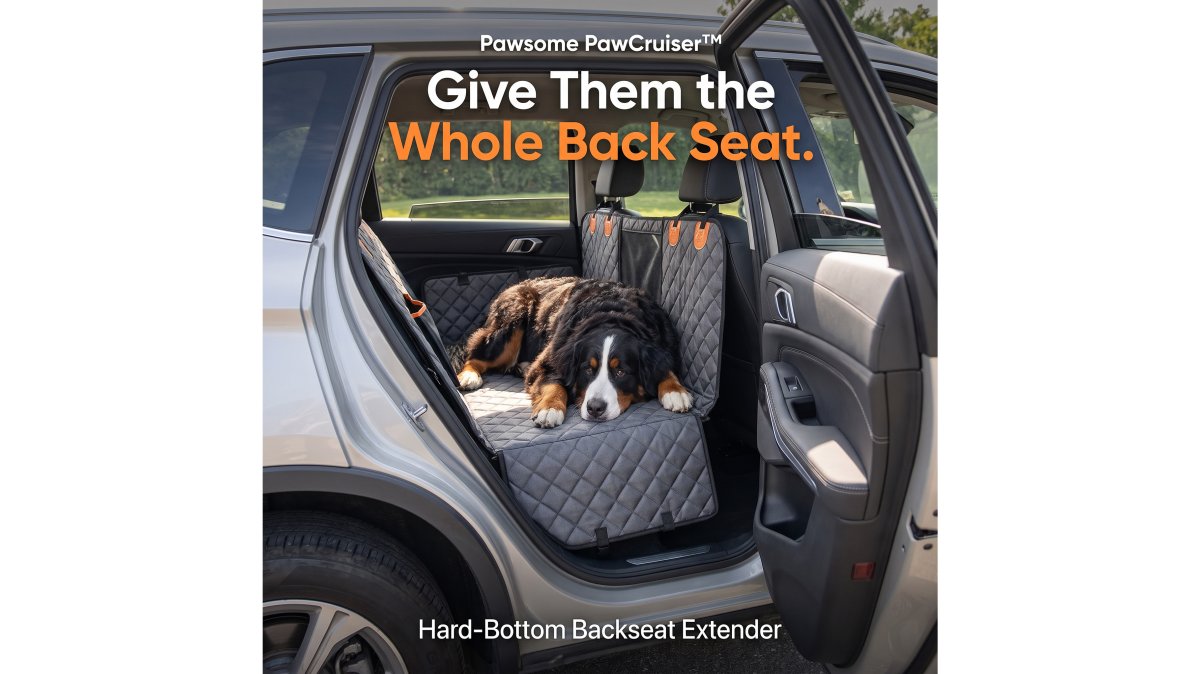
Create a secure travel space. Use a crate, a backseat extender like the Pawsome PawCruiser™ Backseat Extender ($79.99), or a vehicle barrier. The Pawsome PawCruiser keeps your dog contained and prevents them from distracting the driver. Its waterproof design handles accidents, and the non-slip surface keeps your dog secure during stops.
During the Drive: Comfort and Safety Measures
Keep the car calm. Avoid loud music or sudden noises. Speak in a quiet, soothing voice. Sudden movements or harsh braking spike anxiety, drive smoothly.
Pawsome PawCruiser™ Backseat Extender →
Maintain a comfortable temperature. Most dogs prefer it slightly cool, around 65-70°F. Never leave your dog in a parked car, even with the windows down.
Take breaks every 2-3 hours. Stop in a safe, quiet area. Let your dog stretch, eliminate, and drink water. A short walk helps burn nervous energy. Use a leash, never let your dog roam freely near traffic.
Avoid feeding during the drive. Offer water instead. Resume feeding after arrival or at your destination.
Watch for signs of distress. Panting, pacing, or whining means your dog is anxious. Stop and reassure them. Don't reward the anxious behavior with extra attention, keep your tone calm and matter-of-fact.
Reward calm behavior with quiet praise and treats. If your dog settles, acknowledge it. This reinforces that calm is what you want.
Calming Tools and Rewards That Work
Several tools help reduce travel stress. High-value treats work best, something your dog loves and only gets in the car.
Toys provide distraction. Long-lasting chews or puzzle toys keep your dog occupied during drives. Rotate toys to keep them novel and interesting.
Pressure wraps designed for dogs apply gentle, consistent pressure that many dogs find calming. These work similarly to swaddling for babies.
Pheromone products mimic natural calming scents. Some dogs respond well to these. They're not effective for all dogs, but they're worth trying.
A Collapsible Pet Bowl ($14.99) from Pawsome Finds makes hydration easy during stops. The silicone design folds flat for packing, and the portable hook attaches to your bag.

For longer road trips with multiple stops, the Pets Feeding Bowl ($52.60) offers separate compartments for food and water, plus a waste shovel and bag compartment. It's designed for travel convenience and keeps meals organized.
White noise or calming music designed for dogs can help. Some dogs respond to these audio cues. Experiment to see if your dog benefits.
Travel Beyond the Car: Flights and Other Modes
Car travel isn't the only challenge. Some dogs need to fly, take trains, or travel by boat. The principles remain the same: gradual desensitization, positive associations, and comfort measures.
Air travel requires crate training and veterinary clearance. Airlines have specific requirements for pet travel. Contact your airline early to understand size restrictions, temperature-controlled cargo holds, and documentation needs. Start crate training months in advance. Familiarize your dog with the sounds and sensations of airports. A veterinarian can discuss calming options for flight anxiety.
Train and bus travel follow similar rules. Your dog needs a secure space and familiar comfort items. Shorter trips are easier to manage. Always check specific carrier policies before booking.
Boat travel introduces motion and unfamiliar environments. Some dogs are naturally good sailors; others struggle. Start with short boat rides in calm water. Use the same gradual desensitization approach.
For any travel mode, consult your veterinarian about health certificates, vaccination requirements, and any restrictions based on your dog's age or health status.
When to Contact Your Veterinarian About Travel Anxiety
Some anxiety requires professional help. Contact your veterinarian if your dog shows severe panic, aggression, or self-injury during travel. If your dog vomits consistently or shows signs of motion sickness, medication may help.
Your veterinarian can rule out underlying medical issues. Some dogs have inner ear problems or other conditions that mimic anxiety. A professional evaluation clarifies the actual problem.
Prescription medications like trazodone or gabapentin can reduce anxiety for dogs on necessary trips. These work best combined with training, not as a replacement for it. Your veterinarian will discuss dosing, timing, and potential side effects.
Anti-anxiety medications work differently for different dogs. What helps one dog may not help another. Your veterinarian guides you toward the best option based on your dog's age, health, and specific anxiety triggers.
If your dog's anxiety worsens despite training efforts, a veterinary behaviorist, a specialist in animal behavior, can provide advanced guidance. They design customized training plans for severe cases.
Travel anxiety doesn't have to ruin your trips with your dog. Our Pawsome PawCruiser™ Backseat Extender keeps your dog secure and comfortable during car rides, while our Collapsible Pet Bowl and Pets Feeding Bowl make hydration and feeding easy on the road.

| Training Phase | Duration | Focus | Success Indicator |
|---|---|---|---|
| Stationary comfort | Weeks 1-2 | Vehicle exploration, treats, engine off | Dog enters car willingly |
| Short trips | Weeks 3-4 | 5-20 minute drives to positive places | Dog settles during short drives |
| Gradual extension | Weeks 5-6 | Longer trips, varied destinations | Dog shows calm behavior on 30+ minute drives |
| Maintenance | Ongoing | Regular travel, positive reinforcement | Dog remains calm and confident |
Frequently Asked Questions
How do I know if my dog has travel anxiety or motion sickness?
Travel anxiety shows as pacing, whining, panting, and trembling before or during the trip. Motion sickness causes drooling, nausea, and vomiting. Anxious dogs often calm down once the vehicle stops; dogs with motion sickness may vomit regardless. If you're unsure, ask your veterinarian, they can prescribe medication for either condition and help you distinguish between them.
What's the fastest way to calm a dog during travel?
Short-term comfort comes from a secure, familiar space (like a travel crate with bedding from home), high-value treats, and minimal noise. For longer-term results, gradual desensitization works best: start with stationary vehicle time, then short trips to positive destinations. Most dogs show improvement within 2-4 weeks of consistent practice.
Can a travel crate or carrier actually help calm my dog?
Yes. A secure travel crate provides a confined, den-like space that reduces sensory overload and gives your dog a sense of control. Use a crate your dog is already familiar with, line it with familiar bedding, and introduce it gradually before travel. Pair it with treats and calm behavior to create a positive association.
Should I use medication for my dog's travel anxiety?
Medication is worth discussing with your veterinarian if your dog shows severe anxiety, panting, or destructive behavior during travel. Common options include trazodone or gabapentin, which reduce anxiety without heavy sedation. Medication works best alongside gradual training and comfort measures, not as a replacement for them.