


Last Updated: November 24, 2026
Quick Summary
Interactive puppy toys are safe when they are sized larger than the puppy's mouth, simple to open at first, and made from a single solid material with no loose parts. Check each toy for cracks or missing pieces every time you bring it out, and supervise play until the puppy has shown it can handle the toy.
- Choose a toy larger than the puppy's mouth so it cannot be swallowed.
- Start with simple puzzles and move to more steps as the puppy learns.
- Pull on any squeaker or attached piece; if it moves, the puppy can work it loose.
- Only leave a puppy alone with toys it has already shown it can handle.
- Call your veterinarian right away if your puppy destroys or swallows a piece.
Table of Contents
- Why Interactive Toys Matter for Puppies
- How to Choose Puppy Puzzle Toys by Age and Size
- Treat-Dispensing Toys for Puppies: Benefits and Risks
- Safe Puppy Toys for Teething: Materials to Look For
- Keeping Puppies Safe With Interactive Toys Left Alone
- Checking Toys for Damage and Replacing Them on Time
- Building a Simple Puppy Enrichment Routine With Interactive Toys
- Frequently Asked Questions
Why Interactive Toys Matter for Puppies
Interactive puppy toys are one of the most useful tools a new puppy owner can buy. Puppies chew, explore and test everything, and a well-chosen interactive toy gives that energy a safe outlet. The question most owners ask is not whether to buy them, but which ones are safe to leave with a young dog.
Many owners find that a puppy with something to work on settles faster and chews the furniture less. Most puppy trainers describe interactive play as a way to burn mental energy, not just physical energy. A puppy that has to figure out how to reach a treat tends to stay occupied longer than one with a plain toy.
How to Choose Puppy Puzzle Toys by Age and Size
Size and difficulty matter more than most buyers expect. A toy that is too small can be swallowed, and a puzzle that is too hard will frustrate a puppy into giving up or chewing it apart.
Start with a toy that is larger than the puppy's mouth and simple to open. As the puppy learns, move to puzzles with more steps. Check the toy every time you bring it out, because a chewed-down piece can become a choking hazard.
Our pick for large puppies who chew hard is the Pet Ball Teeth Silicon Chew Toy for Large Breeds at $16.99. It is made from silicone and measures approximately 7.5cm in diameter. For a broader look at what to buy at each stage, read Essential Puppy Supplies for New Owners.
The article's guidance on sizing puzzle toys for a puppy comes down to a few practical checks:
| Factor | What to check | Why it matters |
|---|---|---|
| Size | Larger than the puppy's mouth | A toy that is too small can be swallowed |
| Difficulty | Simple to open at first | A puzzle that is too hard frustrates the puppy |
| Progression | Move to more steps as the puppy learns | Keeps the puppy engaged over time |
| Condition | Check every time it is brought out | A chewed-down piece can become a choking hazard |
Treat-Dispensing Toys for Puppies: Benefits and Risks
Treat-dispensing toys reward a puppy for working out the puzzle. They carry real risks if used carelessly.
The main benefit is focus. A puppy that licks or nudges a toy to release kibble is using its brain. The main risk is that a puppy can break off and swallow small pieces, especially if the toy cracks. Supervise the first few sessions, and remove the toy once it starts to crack or lose pieces.
The Rubber Balls Chewing Pet Toys at $23.99 are made from natural rubber and can be stuffed with snacks.
Safe Puppy Toys for Teething: Materials to Look For
Teething puppies need something firm to chew, but not everything marketed as a chew toy is safe. The goal is a toy that gives pressure relief without breaking into pieces a puppy can swallow. Look for toys made from a single, solid material with no loose parts. Natural rubber and food-grade silicone are common choices because they flex under pressure rather than shattering. Avoid toys with small detachable squeakers, strings, or glued-on decorations, which a puppy can pull off and swallow.
Match the material to the puppy's chewing style and mouth size. A young puppy with small teeth and weak jaw pressure does better with a softer, thinner toy it can mouth easily. A puppy that already chews hard needs a thicker wall and a larger diameter so it cannot get the toy behind its molars and bear down. A common pattern is to size up once the puppy can fit the whole toy comfortably in its mouth; at that point the toy is too small and should be swapped for a larger one.
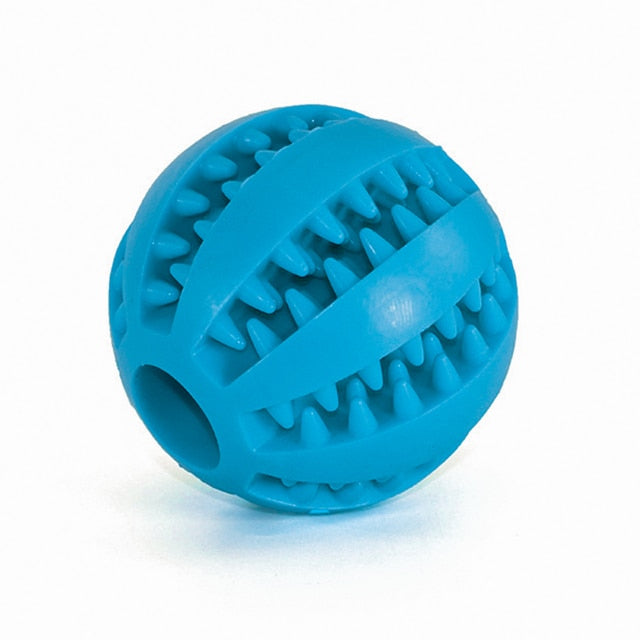
Read the listing for the material before you buy. The Pawsome Finds silicone chew toy is listed as silicone with a 7.5cm diameter. For more detail on durable chew materials for heavy chewers, see the Safe Rubber Chew Toys for Aggressive Chewers buyer's guide.
Check the toy's surface as well. Deep cracks and worn patches can trap bacteria, so clean toys regularly with warm water and mild soap, then let them dry fully. For food-filled toys, rinse out the interior after each use so kibble residue does not sit and spoil.
Watch out: a toy that passes a visual check can still fail under pressure. Try to pull off any squeaker, tag, or attached piece with your fingers before giving the toy to the puppy; if it moves at all, the puppy can likely work it loose too. Remove any toy that shows deep cuts, missing pieces, or thinning material, and keep a spare on hand so you can rotate a worn toy out instead of leaving it in use.
Keeping Puppies Safe With Interactive Toys Left Alone
Leaving a puppy alone with an interactive toy is where most accidents happen. Puppies can chew through a toy quickly, and a toy that is safe under supervision may not be safe unsupervised. The difference is not the toy's label but the puppy's behavior when no one is watching.
Only leave a puppy alone with toys it has already shown it can handle. Test any new toy during supervised sessions first, and watch for signs that the puppy is working on seams, edges, or attached parts rather than the intended chewing surface. A toy that survives several supervised sessions without visible damage is a better candidate for solo time, but it is not a guarantee. Pick up the toy when you leave, or give it only during short, supervised play.
Some toys should only be used with an owner present. Use only toys your puppy has shown it can handle when you are away, and check toy size and condition before each session.
Keep a crate or gated area free of loose strings, small parts, and anything that can be pulled apart. Check the area before you leave, not just the toy. A puppy that is bored may redirect to bedding, crate bars, or the toy's own attachments.
Watch out: if your puppy destroys or swallows a piece, call your veterinarian right away. Do not wait for symptoms. Bring the remaining toy or a photo of it so the veterinarian can assess the material and size of the missing piece. Stop play immediately if you see the puppy gagging, pawing at its mouth, or trying to swallow a fragment.
A practical routine helps. Rotate two or three toys so the puppy does not get bored, and reserve the higher-risk puzzle and treat toys for sessions when you are close enough to step in. Keep each session short, around 10 to 15 minutes at first, and stay close enough to intervene. Over time, you can lengthen play and add more challenging toys as the puppy learns.
Checking Toys for Damage and Replacing Them on Time
A toy that was safe last month can become unsafe after heavy chewing. Inspect toys each time you clean them, and replace any that show deep cuts, missing pieces, or thinning material.
A simple rule works well: if you can pull a piece off with your fingers, the puppy can too. Replace the toy before that happens. Keeping a spare on hand means you can rotate toys instead of letting a worn one stay in use.
Building a Simple Puppy Enrichment Routine With Interactive Toys
A consistent routine does more for a puppy than any single toy. Rotate two or three toys so the puppy does not get bored, and use a puzzle at the times it tends to get restless, such as after meals or before a nap.
Keep each session short, around 10 to 15 minutes at first, and stay close enough to step in. Over time, you can lengthen play and add more challenging toys as the puppy learns.
Pawsome Finds offers free worldwide shipping and a 60-day money-back guarantee. Browse the range and choose the toys that match your puppy's age and chewing style.
Frequently Asked Questions
What are good interactive toys for puppies?
Good options for puppies include puzzle toys, treat-dispensing balls and soft chew toys made from rubber or silicone. Look for toys sized so the puppy cannot swallow them whole, and choose a difficulty level that matches the puppy's age and problem-solving ability. The Rubber Balls Chewing Pet Toys at $23.99 are made from natural rubber and can be stuffed with snacks.
What is the safest toy for a puppy?
The safest toy is one sized larger than the puppy's mouth, made from durable material without small detachable parts, and checked regularly for cracks. Avoid toys that can splinter, stuffing that can be pulled out, or anything small enough to swallow.
Should puppies be supervised when playing with interactive toys?
Yes, puppies should be supervised with interactive toys, especially during their first months. Puppies can chew off pieces, swallow small parts or get stuck in puzzle openings. Supervised play lets you step in before a toy is destroyed, and it is best to remove toys once they show signs of wear. For puppies left alone, use only toys that are well matched to their chewing style and remove them if the puppy begins tearing them apart.
How do I choose the right toy size for my puppy?
Choose a toy that is too large to fit fully in the puppy's mouth and that cannot be easily swallowed. Measure your puppy's muzzle and consider how the puppy chews, since aggressive chewers need tougher materials. Puzzle toys should start simple and get harder as the puppy learns, so a puppy that solves a toy quickly is ready for the next level.
