


Last Updated: November 15, 2026
Quick Summary
Safe rubber chew toys for aggressive chewers should be made from natural rubber or food-grade silicone that flexes under pressure instead of cracking or tearing. Match the toy's firmness and size to your dog's chew strength, and inspect it before and after every session.
- Press your thumbnail into the toy: it should flex and spring back, not crease or crack.
- Veterinarians steer owners away from antlers, hooves, and hard nylon because they can fracture teeth.
- The Rubber Balls Chewing Pet Toys cost $23.99 and are made from natural rubber.
- Keep chew sessions to roughly ten to twenty minutes for a powerful chewer, then put the toy away.
- Wash rubber and silicone toys with warm water and mild soap weekly.
Table of Contents
- Why Aggressive Chewers Need Rubber Chew Toys Built for Power
- How to Choose Safe Dog Toys: A Practical Checklist
- Non-Toxic Rubber Dog Toys: What Safe Materials Actually Look Like
- Vet-Approved Chew Toys: What the Label and the Vet Agree On
- Best Rubber Chew Toys for Large Dogs and Powerful Chewers
- Toy Inspection and Replacement Schedule for Heavy Chewers
- Supervision and Safe Use: Turning Chewing Into a Calm Outlet
- Picking the Right Chew Toy for Your Dog at Pawsome Finds
- Frequently Asked Questions
Why Aggressive Chewers Need Rubber Chew Toys Built for Power
A dog that destroys a plush toy in under ten minutes is not being naughty. That dog is doing exactly what its jaw, breed history, and energy level tell it to do. Safe rubber chew toys for aggressive chewers exist precisely because the wrong toy is not just a waste of money, it is a hazard. Soft plastic can crack into shards, stuffed fabric can become a swallowed lump, and cheap rubber can tear into chunks that lodge in the throat or intestine.
Pet parents often find that a "tough" toy can fail quickly. The difference between a toy that lasts and one that gets shredded usually comes down to material, firmness, and how well the toy matches the dog's chew strength. Below, we break down how to choose, test, and replace rubber chew toys so the outlet stays safe.
How to Choose Safe Dog Toys: A Practical Checklist
Choosing a safe dog toy starts with a simple rule: the toy must be harder than the chew, but soft enough to give slightly under pressure. A toy that is too hard can crack teeth. A toy that is too soft disappears in minutes. The right rubber chew toy sits in the middle.
Work through this checklist before you buy:
- Confirm the material is natural rubber or food-grade silicone, not hard plastic
- Check for a safety indicator or "chew strength" rating on the packaging
- Squeeze the toy: it should flex and spring back, not crease or crack
- Match the size to your dog's mouth so it cannot be swallowed whole
- Look for rounded edges with no thin, tearable seams
- Verify the toy is free of small squeakers or loose parts
A common mistake is buying a toy sized for a medium dog because it looks sturdy. For a deeper walkthrough on matching chew toys to big, strong jaws, see our guide on how to choose chew toys for large dogs and heavy chewers.
Match the Toy to Chewing Behavior, Age, and Dental Condition
Not every strong chewer chews the same way. Some dogs gnaw steadily for an hour. Others bite hard, then lose interest. Puppies chew to relieve teething pain and need softer rubber. Senior dogs may have worn or sensitive teeth and do better with a more yielding toy. Dogs with existing dental disease should be checked by a veterinarian before you hand over anything firm.
Watch how your dog chews for a week. If you see sustained gnawing on one spot, pick a thicker rubber bone or ring. If your dog prefers to chase and mouth, a treat-dispensing ball keeps the chewing behavior redirected into play.
Non-Toxic Rubber Dog Toys: What Safe Materials Actually Look Like
Non-toxic rubber dog toys are made from materials that will not leach harmful chemicals when a dog chews and swallows tiny amounts. Natural rubber and food-grade silicone are the two safest options. Both flex under pressure and resist tearing better than hard plastic.
Look for these labels on the packaging:
- BPA-free and phthalate-free: no hormone-disrupting plasticizers
- Lead-free: important because some imported toys have been recalled for lead paint
- Food-grade silicone: the same standard used for kitchen utensils
- Natural additives: colorants and flavorings derived from plants rather than synthetic dyes
What most guides miss is that "non-toxic" is not a regulated claim on pet toys the way it is on children's products. The Consumer Product Safety Commission oversees recalls but does not pre-approve pet toys, so the burden falls on you to read the label. When a listing is vague about materials, treat that as a red flag.
How to Choose the Right Rubber Firmness
Rubber firmness is the single most overlooked factor in toy selection. Think of it on a scale: soft rubber gives easily and suits puppies and gentle chewers; medium rubber flexes under firm pressure and suits most adult dogs; firm rubber barely yields and is built for powerful chewers.
The test is simple. Press your thumbnail into the toy. If it sinks in easily, the toy is soft. If it barely marks, it is firm. If it feels like a car tire, it is too hard and can damage teeth. A firm rubber toy should still flex when you squeeze it with both hands.
Vet-Approved Chew Toys: What the Label and the Vet Agree On
Vet-approved chew toys share three traits: they are made from a single safe material, they are sized to prevent swallowing, and they are tough enough to resist chunking. Veterinarians generally steer owners away from antlers, hooves, and hard nylon because those materials are harder than tooth enamel and cause fractures.
The American Veterinary Medical Association advises owners to supervise chewing and to replace any toy showing cracks or missing pieces. That guidance is worth taping to the fridge. A toy that passes the squeeze test on day one can still fail after weeks of sustained chewing, so inspection matters as much as the initial purchase.
Best Rubber Chew Toys for Large Dogs and Powerful Chewers
For large dogs and powerful chewers, natural rubber balls and thick silicone chew toys hold up best. They flex instead of shattering, and their rounded shape gives a strong jaw fewer edges to grip and tear.
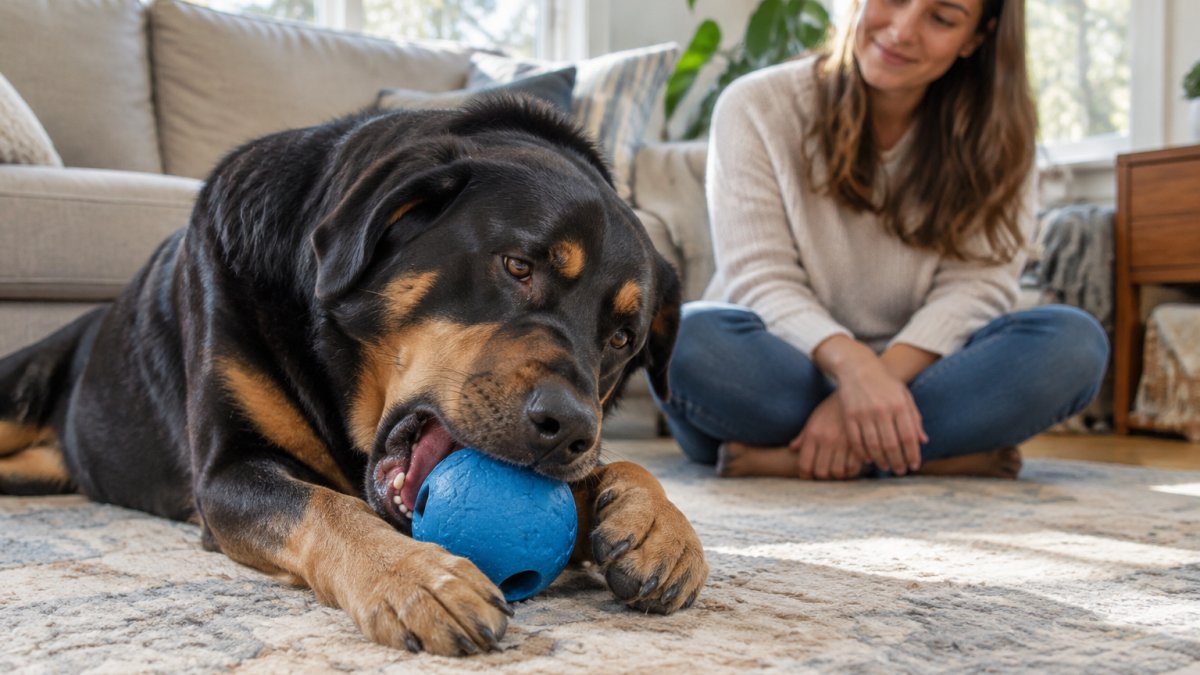
Our top pick is the Rubber Balls Chewing Pet Toys ($23.99). These are crafted from natural rubber and built to withstand enthusiastic chewers.
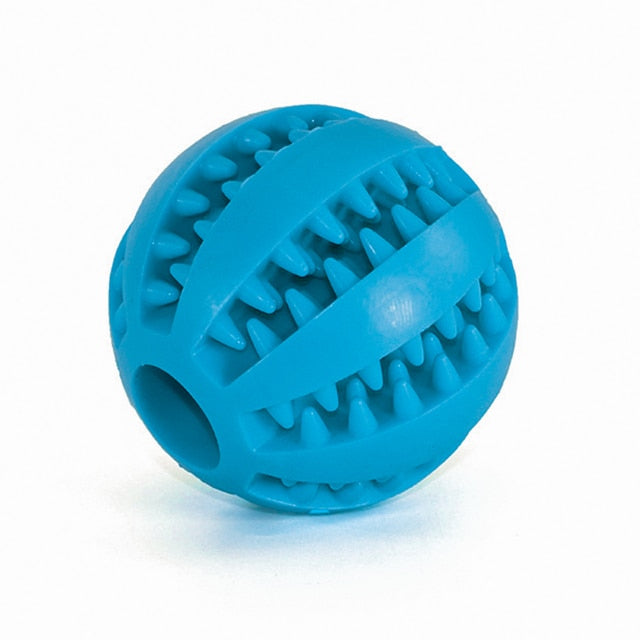
For dental-focused chewing, the Pet Ball Teeth Silicon Chew Toys for Large Breeds ($16.99) is a strong second option.
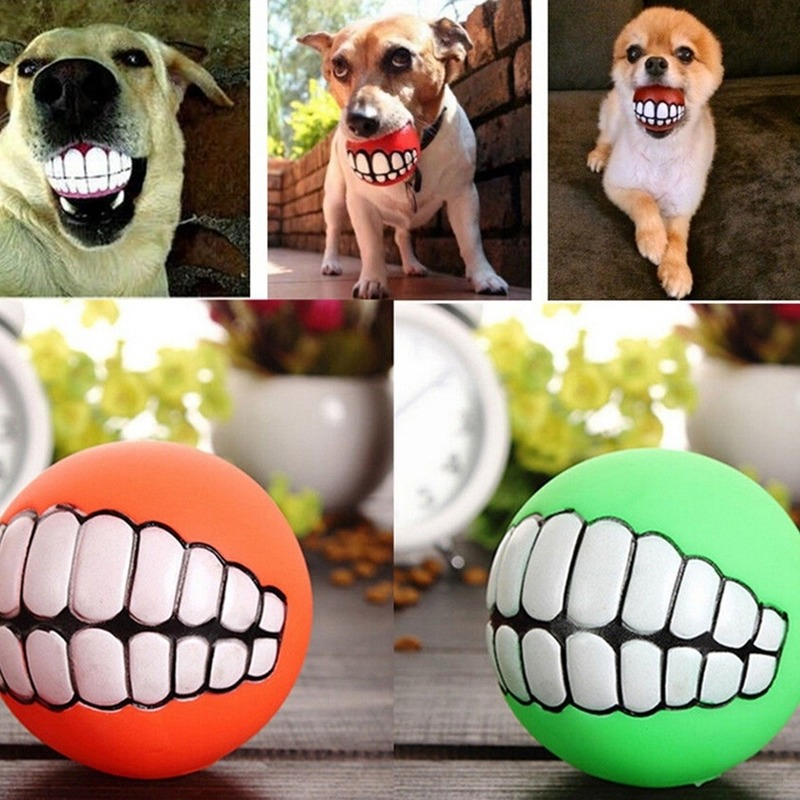
| Toy | Price | Material | Best For | Watch Out |
|---|---|---|---|---|
| Rubber Balls Chewing Pet Toys | $23.99 | Natural rubber | Stuffing with treats, fetch, strong chewers | Not for dogs that swallow whole pieces |
| Pet Ball Teeth Silicone Chew Toys | $16.99 | Food-grade silicone | Dental care, heavy chewing, large breeds | Random color, so you cannot pick |
Toy Inspection and Replacement Schedule for Heavy Chewers
Most toys do not fail suddenly. They fail in stages, and a routine inspection catches the damage before it becomes a swallowed chunk. Build a simple schedule and stick to it.
| Frequency | What to Check | Action |
|---|---|---|
| Every session | Cracks, missing pieces, loose nubs | Remove the toy immediately |
| Weekly | Deep squeeze test, seam check | Retire any toy that creases or tears |
| Monthly | Full toy audit across the household | Replace worn toys, rotate stock |
| After illness | Vomiting, drooling, loose stool | Check toys for missing pieces and call the vet |
Watch out: a toy that looks fine on the outside can have a hairline crack inside the wall. If you can flex it and hear a faint crackle, throw it out. Ingested rubber fragments can cause a blockage that requires surgery.
Supervision and Safe Use: Turning Chewing Into a Calm Outlet
Supervised chewing is the difference between a healthy outlet and an emergency vet visit. Destructive chewing usually signals boredom or pent-up energy, not aggression. Give the dog a durable rubber chew toy at the moment it starts gnawing on furniture, and reward calm chewing with praise.
Session length matters more than most owners realize. A common pattern is to offer a chew toy for a defined window, roughly ten to twenty minutes for a powerful chewer, then put it away.
A few habits make this easier:
- Keep two or three toys in rotation so novelty keeps interest high
- Stuff a treat-dispensing toy before you leave the house to redirect chewing
- Never leave a powerful chewer alone with a new toy until you have watched it for a full session
- Wash rubber and silicone toys with warm water and mild soap weekly
- Inspect the toy before and after every session, not just weekly
A Practical Inspection Routine
Most toys do not fail suddenly. They fail in stages, and a routine inspection catches the damage before it becomes a swallowed chunk.
Use the squeeze test as part of the routine. Flex the toy with both hands and listen for a faint crackle, which can indicate a hairline crack inside the wall. If the toy creases, tears, or loses pieces, retire it immediately.
Watch out: if you find a missing piece and your dog is vomiting, drooling, or has loose stool, check the toys for the missing section and call your veterinarian. Do not wait for symptoms to worsen.
Treat Use and When to Consult a Veterinarian
Treat-dispensing toys are useful for redirecting chewing, but they change the supervision equation. Use treats that are appropriate for your dog's size and diet, and avoid anything that can lodge in the toy or break into small pieces.
Consult your veterinarian if your dog shows pain when chewing, drops food or toys, has bad breath that persists, or has a history of swallowing foreign objects. For a relentless chewer, our returns and refunds policy covers you if a toy does not fit your dog's needs, and our shipping policy explains delivery timelines so you can plan ahead.
Picking the Right Chew Toy for Your Dog at Pawsome Finds
Choosing a safe rubber chew toy for an aggressive chewer comes down to three decisions: material, firmness, and size. Get those right and you avoid most of the damage, expense, and worry that come with a failed toy. Get them wrong and you are back at the pet store next week.
Pawsome Finds curates pet essentials with the same care we would use for our own dogs. Every order ships free worldwide and is backed by a 60-day money-back guarantee, so you can try a toy without the risk.
Your dog's chewing is not a problem to eliminate, it is energy to redirect. Pick a toy built for the jaw in front of you, inspect it often, and supervise the first few sessions.
Frequently Asked Questions
What is the safest chew toy for aggressive chewers?
Solid natural rubber toys with no small parts, no hollow seams, and a firmness matched to your dog's chew strength are the safest starting point. Look for non-toxic, food-grade rubber that gives slightly under pressure but does not tear. Avoid thin plastic, rawhide knots, and toys small enough to swallow. Rotate two or three rubber chew toys so no single one gets worn down fast, and inspect each one weekly for cracks or missing chunks.
Are rubber chew toys safe for dogs?
Yes, when the rubber is non-toxic and the toy is sized correctly for your dog. Natural rubber is flexible, so it absorbs jaw pressure instead of shattering like hard plastic. Check that the toy is BPA-free, phthalate-free, and lead-free, and that it has no glued-on pieces. Always supervise the first few sessions, then inspect for tears. A rubber chew toy that shows deep gouges or loose fragments should be replaced right away.
How can I tell if a rubber toy is safe for my dog?
Squeeze it: a safe rubber chew toy flexes and springs back without cracking. Check the label for non-toxic, food-grade materials and confirm the size is larger than your dog can fit fully in its mouth. Run a fingernail along the seams; rough or splitting edges are a red flag. If a toy leaves rubber bits on the floor after a session, it is too soft for your chewer and should be swapped for a firmer option.
What should I avoid when buying toys for aggressive chewers?
Skip toys with squeakers, rope tassels, or glued parts, since a powerful chewer can rip these off and swallow them. Avoid hard nylon bones that can crack teeth, and steer clear of any rubber toy that smells strongly of chemicals. Also avoid toys that are too small for your dog's breed. Choose one-piece natural rubber designs, size up when in doubt, and replace any toy that develops punctures or missing chunks.
