


Last Updated: November 12, 2026
Quick Summary
Slow feeder bowls are worth it for many puppies that eat too fast, because the ridges and mazes force them to work for each bite. They can help with gulping and air swallowing, but the right design depends on the puppy's age, size and feeding habits.
- Puppies that gulp food in seconds may swallow air and may not register fullness in time.
- Start with a shallow, wide-channel bowl for puppies under about 12 weeks.
- Measure your puppy's muzzle width and compare it to the bowl's channel width.
- Time three meals before and after switching bowls to check whether it is slowing eating.
- Stop using the bowl if your puppy bites it, flips it, or shows rising frustration.
Table of Contents
- Why Puppies Eat So Fast and Why It Matters
- Benefits of Slow Feeder Bowls for Puppies
- Choosing the Right Slow Feeder for Your Puppy's Age and Size
- Dog Slow Feeder Bowl Options for Wet Food
- How to Introduce a Slow Feeder to a Puppy
- Safety, Supervision and Cleaning Your Slow Feeder
- Choosing Your First Slow Feeder Plate from Pawsome Finds
- Frequently Asked Questions
Why Puppies Eat So Fast and Why It Matters
Slow feeder bowls for puppies are designed to turn a few minutes of kibble into a longer, more deliberate meal. Puppies often wolf down food in seconds, and that fast eating can lead to gulping air, poor digestion and, in some cases, choking.
Puppies are built to eat quickly. In the wild, a pup competing with littermates or other animals learns to get food down fast, and that instinct carries into the living room. A bowl filled with kibble offers no resistance, so the puppy simply scoops and swallows.
Fast eating matters for a few practical reasons. Gulping food can mean swallowing air along with it, which many owners associate with an upset stomach or post-meal discomfort. It can also make it harder for a puppy to register that it is full before it has eaten too much.
A slow feeder does not fix every feeding problem. It adds friction, so the puppy has to work for each bite. That change in pace is the whole point, and it is why owners of very young dogs often ask whether these bowls are worth the cost.
Benefits of Slow Feeder Bowls for Puppies
The main benefit of a slow feeder is that it slows the meal down. A puppy that has to nose around ridges, mazes or raised obstacles cannot swallow its food in one gulp. A slow feeder can make mealtimes last several minutes instead of a few seconds, which gives the dog time to chew.
Slow feeders also provide mental stimulation. Figuring out how to reach the next piece of kibble keeps a puppy engaged, which can make meals feel more like an activity than a race. This is useful for busy owners who want a puppy to occupy itself for a few minutes while they get other things done.
A few caveats are worth keeping in mind. Slow feeders are not a cure for medical problems, and they will not solve every case of fast eating on their own. If a puppy shows persistent vomiting, choking, weight loss or other concerning signs, a veterinarian should evaluate the dog rather than relying on a bowl.
Choosing the Right Slow Feeder for Your Puppy's Age and Size
Not every slow feeder suits every puppy. A bowl that works for a 12-week-old Chihuahua can be too difficult, or too shallow, for a growing Labrador. The two variables that matter most are the puppy's age (which drives coordination and frustration tolerance) and its muzzle size (which drives whether the puppy can physically reach the food).
Age is the first filter. For a fuller breakdown of picking a bowl at each stage, see how to choose the best puppy feeding bowls.
Muzzle size is the second filter. Measure the width of your puppy's muzzle at the widest point and compare it to the width of the channels in the bowl. A channel narrower than the muzzle forces the puppy to lick rather than scoop, which is fine for wet food but frustrating for kibble.
Food size interacts with maze depth. Large kibble sits on top of shallow ridges and does not slow the puppy much; small kibble falls into deep grooves and can be hard to extract.
Maze Depth and Difficulty for Young Puppies
Very young puppies have small mouths and limited coordination, so a deep, complicated maze can frustrate them rather than slow them down. A good starting point is a shallow design with wide channels, then a deeper maze as the puppy grows and learns the mechanics. Watch how the puppy responds in the first few meals. If it gets stuck repeatedly or refuses to eat, step back to an easier design.
A practical difficulty ladder looks like this: a flat silicone plate with shallow ridges, then a single-ring maze, then a multi-ring or spiral maze, then a deep puzzle with raised pegs. Move up only when the puppy finishes the current level in roughly the same time it used to take to gulp its food, that is the signal that the bowl is no longer doing much work.
Watch out: a puppy that is guarding the bowl, growling when approached, or swallowing without chewing may be telling you the design is wrong for its temperament, not just its size, stop and reassess before pushing to a harder maze.
A bowl that skids across the kitchen can turn mealtime into a chase and defeat the purpose of a calmer, slower meal.
Dog Slow Feeder Bowl Options for Wet Food
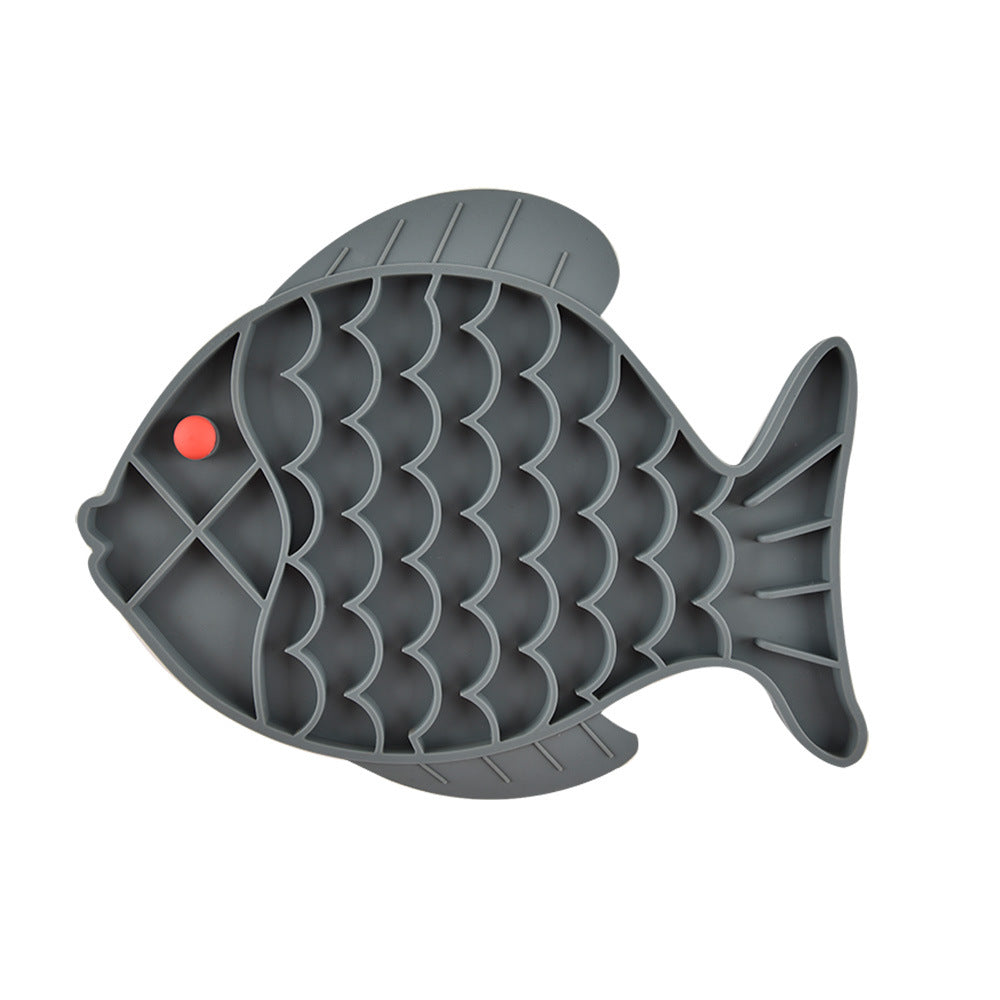
Wet food behaves differently from kibble, so the bowl choice matters. Wet food spreads and sticks, which can make cleaning harder, but a silicone plate with a flat surface makes it easy for a puppy to lick and work at its meal.
The Silicone Slow Food Plate for Dogs and Pets from Pawsome Finds is one option for wet food. Its silicone build is designed to encourage licking rather than gulping, and it can also be used as a cat bowl. It is priced at $28.99 and comes in several colors, including Pink, Camouflage, Green, Blue and Grey. Its licking pad can be packaged for easy storage and transport.
A few owners prefer a stainless steel bowl for wet food because it resists odors and stays in place. Choose the option that matches how your puppy eats and how often you can clean.
The article compares the silicone plate it recommends for wet food with a stainless steel alternative, as summarised below.
| Option | Best for | Key difference |
|---|---|---|
| Silicone Slow Food Plate | Wet food | Silicone build encourages licking rather than gulping |
| Stainless steel bowl | Owners wanting odor resistance | Resists odors and stays in place |
| Silicone plate price | Budget planning | $28.99, several colors |
How to Introduce a Slow Feeder to a Puppy
Introduce a slow feeder gradually. Start with the bowl placed on the floor and a small amount of food spread across the surface, so the puppy learns that the bowl holds dinner without any frustration. Once the puppy is comfortable, add more food and let the grooves do their work.
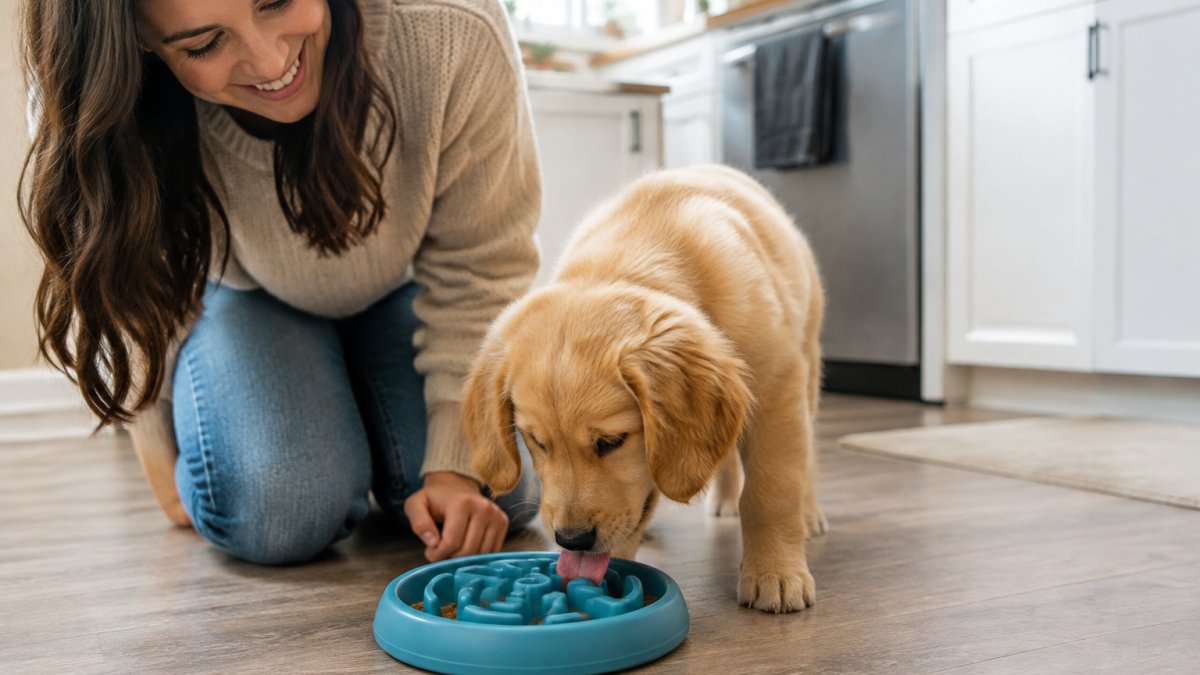
Keep the first few sessions short and supervised. Praise calm, steady eating and avoid rushing the puppy. If the puppy paws at the bowl or tips it over, reduce the amount of food and try again the next day.
!Young puppy eating from a silicone slow feeder plate on a kitchen floor while the owner kneels nearby and smiles
Safety, Supervision and Cleaning Your Slow Feeder
Always supervise a puppy during its first several meals with a slow feeder. Watch for signs that the bowl is unsuitable, including repeated gagging, licking the bowl without eating, or frustration that leads to biting or chewing the bowl itself. Remove the bowl if any of these appear and try a simpler design.
A short list of stop signs is worth keeping in mind. Stop using the feeder and try a different design if the puppy chews or bites at the bowl, paws at it aggressively enough to flip it, leaves most of the food stuck in the grooves after ten minutes, or shows rising frustration across several meals (whining, backing away, or refusing to approach the bowl). These are signs the maze is too hard or the material is not durable enough for a teething puppy, not signs the puppy is being stubborn.
Stability matters. A bowl that slides across the floor can startle a puppy or cause it to knock food everywhere. A non-slip base or a heavier stainless steel bowl helps keep the feeder in place during meals. On hard floors, a silicone ring or a damp towel under the bowl is a simple fix.
Measuring Whether the Bowl Is Actually Slowing Meals
Most owners never check whether the slow feeder is working. A simple baseline-and-follow-up method fixes that. Time three normal meals before switching bowls and write down the average. Then time the first three meals in the slow feeder. A useful target is roughly two to five times the original mealtime; if the puppy finishes in under a minute, the maze is too easy, and if it gives up or leaves food behind, it is too hard. Re-time once a month as the puppy grows, because a bowl that slowed a 10-week-old may barely slow a 16-week-old.
Cleaning Narrow Grooves and Preventing Residue Buildup
Cleaning is where many slow feeders fall short. Food residue can collect in narrow grooves and cause odor or bacteria if left behind. Use a small brush to reach the channels, wash with warm soapy water after every meal, and check whether the bowl is dishwasher safe.
Beyond the general dishwasher claim, inspect the bowl after each wash. Hold it up to the light and look for kibble dust or a film in the deepest channels and around the base of raised pegs. A soft bottle brush or a dedicated groove brush reaches where a sponge cannot. If the bowl has a rubberized non-slip ring, lift it and clean underneath, that seam is a common hiding place for residue.
Choosing Your First Slow Feeder Plate from Pawsome Finds
For most puppy owners, a slow feeder is worth trying if the puppy eats too fast and the owner is willing to supervise the first few meals and keep the bowl clean. If you are unsure whether a specialty gadget justifies its price, read our buyer's guide on whether expensive pet gadgets are worth it. Start with a simple design, watch how the puppy responds, and move to a more challenging option as the dog grows.
Pawsome Finds offers a curated range of pet essentials, including the Silicone Slow Food Plate for Dogs and Pets. Pawsome Finds offers free worldwide shipping and a 60-day money-back guarantee. Shop Pawsome Products to find the right feeder for your puppy's age, size and meal routine.
Frequently Asked Questions
Should a puppy use a slow feeder bowl?
Many puppies benefit from one, especially those that gulp food, eat quickly, or swallow air during meals. A slow feeder adds obstacles or licking surfaces that make meals last longer. However, very young puppies still learning to chew and eat solid food may need a simpler, shallow design first. Watch your puppy closely during the first few meals, and stop using the feeder if it seems frustrated, struggles to eat, or gets stuck on any part of the design.
Can a puppy eat wet food out of a slow feeder bowl?
Yes, a slow feeder bowl works well with wet food because the ridges or licking surface hold the food in place and slow the pace of eating. Spread wet food thinly across the surface so your puppy can lick it up. Avoid overfilling, since wet food can spill over the edges. Rinse promptly after each meal.
What is the best slow feeder bowl for puppies?
The best option depends on your puppy's age, size and eating style. The Pawsome Finds Silicone Slow Food Plate for Dogs and Pets ($28.99) is a flat silicone plate designed to encourage licking rather than gulping. Choose a design with a stable, non-slip base and no small detachable parts that a puppy could chew off. Check that the material is food-safe and that the bowl is easy to wash by hand or in the dishwasher.
How do I choose the right size slow feeder for my puppy?
Match the feeder's size to your puppy's current size and the amount of food you serve, not only to the adult size of the breed. A feeder that is too large can make a small puppy feel overwhelmed, while one that is too small may frustrate a larger puppy. Measure the width of your puppy's muzzle and make sure the feeder lets the puppy reach the food comfortably without pushing its face into the rim. Reassess the size as your puppy grows.
