


Last Updated: November 4, 2026
Quick Summary
The best puppy feeding bowls for new owners are stable, easy-to-clean bowls sized to your puppy's growth stage. Stainless steel suits everyday meals, silicone suits slow feeding and travel, and sizes should step up one at a time as your puppy grows.
- Size bowls by growth stage, not by breed name, and plan for at least one upgrade in the first year.
- Puppies from 8 to 12 weeks usually need small, shallow bowls with low sides.
- Stainless steel resists odors and bacteria and stands up to daily washing and dishwasher cycles.
- Silicone bowls fold for travel but can be chewed through, so inspect them regularly for tears.
- Replace any bowl that is cracked, deeply scratched, torn or chewed to avoid bacteria buildup.
Table of Contents
- Why Your Puppy's Bowl Matters More Than You Think
- Choosing a Bowl by Puppy Size and Age
- Bowl Materials: Stainless Steel, Silicone, Ceramic and Plastic
- Best Dog Bowls to Prevent Bacteria
- Slow Feeder Bowl Benefits for Growing Puppies
- Best Dog Water Bowl for Messy Drinkers
- Your Puppy Feeding Bowl Checklist and Next Step
- Frequently Asked Questions
Why Your Puppy's Bowl Matters More Than You Think
Your puppy's feeding bowl shapes how they eat, drink and stay clean every day, and it is one of the first supplies new owners buy. Pawsome Finds has put together this guide to help you pick the right puppy feeding bowls for your first furry companion. A good bowl can help prevent those everyday problems. Our Portable Pet Feeding Bowl is a portable silicone option that folds for travel.
The bowl also affects health and routine. Puppies that gulp their food can swallow air, and a bowl that is too deep or too shallow for a growing pup can make meals harder.
Choosing a Bowl by Puppy Size and Age
Bowl size is not a one-time decision. A puppy's mouth, muzzle and eating style change fast in the first year, so the right bowl at 8 weeks is often wrong by 6 months. Instead of buying one bowl and hoping it lasts, size by growth stage and plan for at least one upgrade.
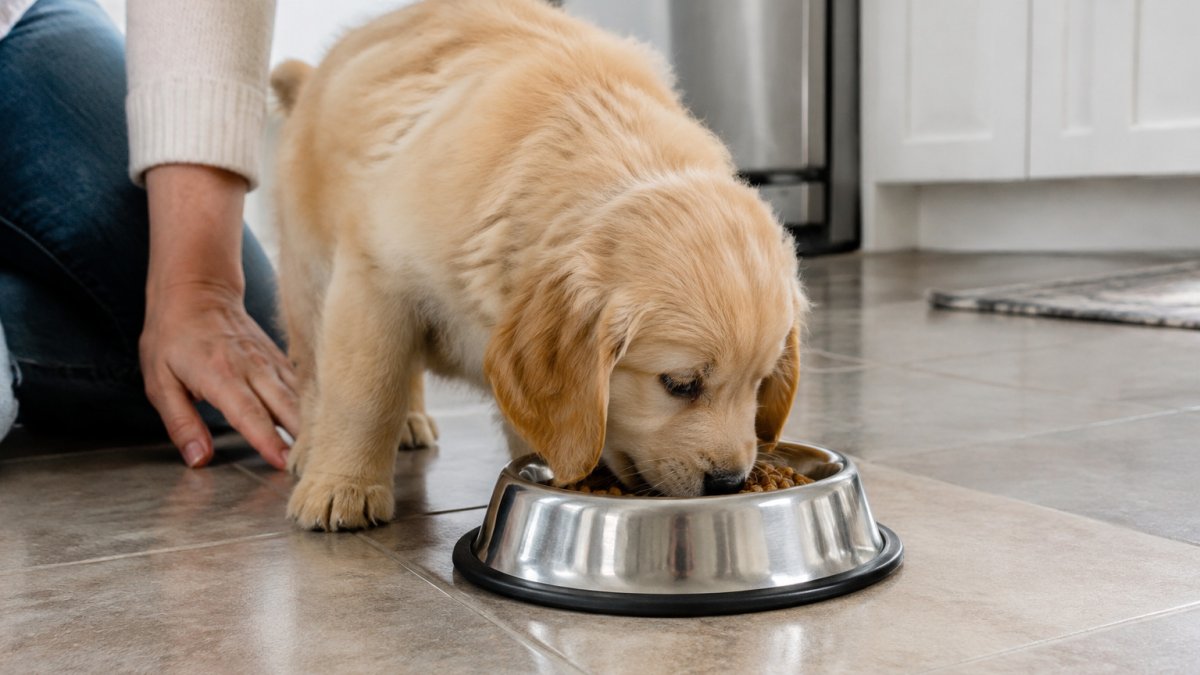
A practical way to think about it is by capacity relative to meal size, not by the breed name on the label. As a rule of thumb, a food bowl should hold the full meal with room to spare so kibble does not pile against the rim, and a water bowl should hold enough that you are not refilling it every hour. A small bowl often suits the early weeks, a medium bowl can carry a puppy through the teething and rapid-growth months, and a large bowl is typically an adult-size purchase.
Use these stage cues rather than a fixed calendar:
- 8 to 12 weeks: small, shallow bowls. Puppies this age have short muzzles and tend to push food forward, so a shallow bowl with low sides is easier to reach than a deep bucket.
- 3 to 6 months: medium bowls. Appetite and meal size climb quickly during this stretch, and a bowl that was fine at 10 weeks starts to look crowded.
- 6 to 12 months: move toward adult capacity. Large-breed puppies may need the large size earlier; toy breeds may stay on medium well into adulthood.
Signs your puppy has outgrown a bowl:
- Kibble stacks above the rim or spills over the edge during eating.
- Your puppy's muzzle presses against the sides, or they tilt their head awkwardly to reach the food.
- They paw at the bowl or drag it because the base is now too light for their size.
- You are refilling water far more often than you did a month ago.
Watch out: sizing up too fast can backfire. An oversized bowl lets a fast eater take bigger mouthfuls and gulp more air, so move up one size at a time and watch how your puppy eats after the switch.
For reference, our Non-Slip Dual-Use Stainless Steel Pet Bowl comes in three sizes, Small (14104.5cm), Medium (17.5136cm) and Large (2216.57cm), at $57.96, which lets you step up as your puppy grows without changing bowl style. The Collapsible Pet Bowl is a lighter option at $14.99 in a 350ml size.
Bowl size changes fast in the first year, so the sizing stages below show when to move up.
| Puppy stage | Bowl type | Key cue |
|---|---|---|
| 8 to 12 weeks | Small, shallow bowls | Short muzzles; low sides are easier to reach |
| 3 to 6 months | Medium bowls | Meal size climbs quickly |
| 6 to 12 months | Move toward adult capacity | Large breeds may need large sooner |
| Any stage | Upgrade one size at a time | Oversized bowls encourage gulping air |
Bowl Materials: Stainless Steel, Silicone, Ceramic and Plastic
Material decides how a bowl cleans, how long it lasts and how safe it is for a puppy that chews everything. Each common material has real trade-offs, so match it to your puppy's behavior rather than picking on looks alone.
Stainless steel. The default for everyday feeding. It does not absorb odors, resists bacteria better than porous materials, and stands up to daily washing and dishwasher cycles. It is heavier than plastic, which helps keep the bowl in place, and it does not chip the way ceramic can. The main downside is noise, steel clatters on hard floors, and a thin steel bowl can slide without a non-slip base. Our Non-Slip Dual-Use Stainless Steel Pet Bowl pairs steel construction with a non-slip base.
Silicone. Flexible, lightweight and quiet, and it folds or collapses for travel and storage. Silicone is gentle on a puppy's muzzle and works well for slow-feed plates and lick mats. It is not chew-proof, though, and a determined chewer can bite through it, so inspect silicone bowls regularly for tears. Our Silicone Slow Food Plate is made from silicone.
Ceramic. Heavy and stable, which suits messy drinkers and bowl pushers, and it does not hold odors. The trade-offs are weight and breakage: ceramic chips and cracks if dropped, and a cracked glaze can harbor bacteria. Check that a ceramic bowl is labeled food-safe and lead-free before buying, and retire any bowl with a chip or crack.
Non-Slip Dual-Use Stainless Steel Pet Bowl →
Plastic. Cheap and light, but the material most likely to scratch, stain and absorb odors over time. Scratches create places for bacteria to settle, and some plastics raise concerns about chemical leaching, especially when chewed or washed at high heat. If you choose plastic, look for a food-safe, BPA-free label, hand-wash where the manufacturer recommends it, and replace the bowl at the first sign of deep scratches or chewing damage.
A quick way to decide:
- Fast eater or gulper: silicone slow-feed plate or a stainless bowl with an insert.
- Bowl pusher or messy drinker: heavy ceramic or a stainless bowl with a non-slip base.
- Chewer: stainless steel, since it is the hardest material to destroy.
- Travel and outings: collapsible silicone.
Watch out: no material is indestructible. Any bowl that is cracked, deeply scratched, torn or chewed should be replaced, because damaged surfaces are where bacteria and, in the case of damaged plastic or glaze, potential leaching problems start.
Best Dog Bowls to Prevent Bacteria
Leftover food and water can grow bacteria, so a bowl should be cleaned regularly. Wash bowls after every meal and refill water daily.
Our Non-Slip Dual-Use Stainless Steel Pet Bowl pairs stainless steel construction with a non-slip base.

Slow Feeder Bowl Benefits for Growing Puppies
Slow feeder bowls and plates slow down fast eaters. Puppies that eat quickly may gulp air, and a slower pace can help.
Our Silicone Slow Food Plate comes with a licking pad and is priced at $28.99. Check with your vet if your puppy has any feeding concerns.

Best Dog Water Bowl for Messy Drinkers
Some puppies splash water everywhere, so a heavier, stable bowl helps. If your pup is a messy drinker, choose a bowl with a non-slip base so it does not tip over during drinking. Keep water bowls in a spot where spills are easy to wipe up.
For travel or outdoor use, the Collapsible Pet Bowl is light and folds flat, with a portable hook for easy carrying. It holds 350ml and weighs approximately 65g. For a larger option, the Pets Feeding Bowl costs $52.60 and includes separate compartments for food and water, plus a waste shovel with a bag compartment.

Your Puppy Feeding Bowl Checklist and Next Step
Before you buy, run through this checklist:
- Size fits your puppy now and as they grow
- Material is easy to wash every day
- Base is non-slip or stable
- Slow feeder option if your puppy eats fast
- Travel bowl for trips and outings
Start with one everyday bowl, then add a travel or slow feeder option as your routine takes shape. For the wider picture, see our essential puppy supplies guide for new owners. Browse our full range of puppy feeding bowls to find the right fit for your pup.
Frequently Asked Questions
What kind of bowl is best for puppies?
A stainless steel bowl with a non-slip base is a practical starting point for most new puppy owners. Choose a size that matches your puppy's current body size, then plan to upgrade as the puppy grows. Pawsome Finds offers the Non-Slip Dual-Use Stainless Steel Pet Bowl in three sizes, priced at $57.96, which fits this need.
Should a puppy use a slow feeder bowl?
Many puppies eat too fast, which can cause gulping and vomiting. Pawsome Finds' Silicone Slow Food Plate for Dogs and Pets, priced at $28.99, uses a licking design. Supervise the first few meals to make sure your puppy adjusts comfortably to the new style.
Is stainless steel or ceramic better for puppy bowls?
Stainless steel is a common choice for puppy bowls. Ceramic can look appealing and feel heavy enough to resist tipping, but it can chip and crack, leaving spaces where bacteria can collect. Silicone is flexible and collapses for travel. Weigh durability, cleaning ease and your puppy's habits before deciding.
How often should I clean my puppy's feeding bowl?
Wash your puppy's food bowl after every meal, and refresh the water bowl daily. Use warm water and mild dish soap, then rinse thoroughly. Replace or deep-clean bowls that show scratches, since grooves can trap residue.
