


Table of Contents
- Why Backseat Extenders Help Anxious Dogs Feel Safer
- Hard Bottom Dog Car Seat Extenders vs. Soft Designs
- Choosing a Dog Backseat Extender for Large Dogs
- Car Safety Harnesses and Restraint Compatibility
- How to Calm a Dog During Car Travel
- Key Features to Prioritize: Stability, Waterproofing, and Non-Slip Backing
- Common Mistakes That Undermine Comfort and Safety
- Conclusion
- Frequently Asked Questions
Last Updated: October 14, 2026
Why Backseat Extenders Help Anxious Dogs Feel Safer
Anxious dogs struggle in cars because confined space, unfamiliar motion, and unstable footing trigger fear, which is why backseat extenders anxious dogs rely on create a larger, stable platform that restores control. A backseat extender for anxious dogs creates a larger, stable platform that restores a sense of control.

Physical comfort drives emotional calm: when a dog can brace against a stable surface and see out the window, the startle response to turns and acceleration drops.
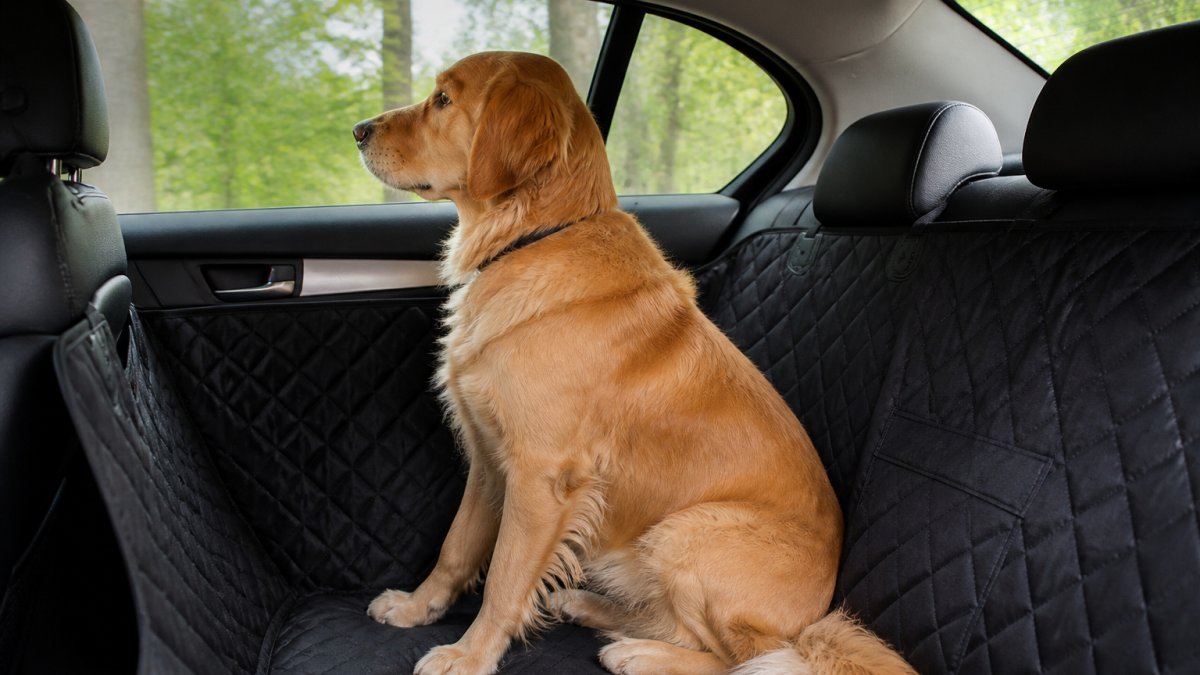
A dedicated space also signals that the car is a safe zone, not chaos. Many anxious dogs improve within the first few trips once they have a secure place to settle, and the extender stops the sliding during stops and turns that triggers travel panic.
Hard Bottom Dog Car Seat Extenders vs. Soft Designs
When choosing between a hard bottom dog car seat extender and a soft, hammock-style design, the core trade-off comes down to stability versus flexibility. Hard-bottom extenders use rigid panels or a solid platform base.
Hard-bottom extenders win for anxious dogs because they provide the firmest, most predictable surface. Your dog can brace without the platform shifting, critical for dogs that panic at movement beneath them, and the rigid structure resists the center sag that soft designs develop.
Soft, hammock-style extenders fold compactly and weigh less, suiting owners who switch between vehicles. But they sag under weight: the fabric stretches, the center dips, and the dog feels less secure, the opposite of what an anxious traveler needs.
For anxious dogs, a hard-bottom design is the reliable choice.
Choosing a Dog Backseat Extender for Large Dogs
Large dogs stress an extender in ways small dogs never do: concentrated weight, more surface area to lie flat, and more leverage when they shift or brace. A dog backseat extender for large dogs must solve all three, not just list a weight limit.
Start with a measurement checklist, not a product page
Most fit failures happen before purchase. Measure these five numbers for your vehicle:
- Bench width, measure the rear seat cushion from door to door at its widest point. This is your hard ceiling on extender width.
- Seat depth, measure from the front edge of the rear cushion to the seatback. A large dog needs enough depth to lie down without its head hanging off.
- Footwell depth and width, if the extender bridges the footwell, measure how far down and across the gap runs. A shallow bridge sags; a deep one needs rigid support.
- Headrest spacing, measure center-to-center between the two rear headrest posts. This determines whether strap-style attachments will sit square or pull the platform crooked.
- Door opening height and width, a Great Dane or Mastiff has to get in and out. If the extender raises the floor too high, your dog may refuse to load, which is its own anxiety trigger.
Write them down. Any extender whose listed dimensions fall outside them is disqualified, however good the reviews.
Weight capacity is a floor, not a target
Manufacturer weight limits describe the load a platform is rated to hold, not the load it holds comfortably. A platform rated at 100 pounds can feel springy under a 90-pound dog because the rating reflects a static load, not a dog that shifts, braces, and pushes off during turns. For dogs at or above roughly 70 pounds, choose a rigid panel or reinforced frame over a fabric sling, and treat the stated limit as the absolute maximum, not the working range.
Match the extender to how your dog actually rides
Large dogs tend to fall into a few travel styles, and each one stresses the platform differently:
- The layer, lies down for the whole trip. Prioritize flat, uninterrupted surface area and a non-slip top so paws don't creep during braking.
- The pacer, shifts position constantly. Prioritize a platform that stays put under lateral load and has no gaps where a paw can drop through.
- The bracer, plants its feet and leans into turns. Prioritize rigid support and secure attachment at the headrests so the platform can't rock.
- The multi-dog household, two large dogs on one extender. Prioritize total width and a center that doesn't dip when weight lands on one side.
Vehicle type changes the answer
A full-size SUV or truck with a wide, flat bench usually takes a broad rigid platform. A sedan or crossover with a narrower bench and deep footwell often needs a bridging design with adjustable straps so the platform sits level. If you drive more than one vehicle, measure both, a platform that fits the SUV may overhang the sedan's seat and block the door.
With your measurements and your dog's travel style, the shortlist writes itself: rigid support for heavy dogs, adjustable attachment for narrow benches, and enough flat area for how your dog settles.
Car Safety Harnesses and Restraint Compatibility
A backseat extender creates comfort, but it doesn't secure your dog in a crash, that's where a car safety harness for dogs becomes essential.
Safety harnesses attach to your vehicle's seat belt system, creating a crash-tested restraint. According to the National Highway Traffic Safety Administration's guidance on pet safety, unrestrained pets are at extreme risk during vehicle collisions.
Check whether your extender has built-in harness attachment points or works with standard seat-belt anchors.
The psychological benefit is real: secured dogs feel more contained and less anxious, and the gentle tension of a properly fitted harness can reduce pacing and whining, especially in dogs with generalized anxiety.
How to Calm a Dog During Car Travel
Equipment sets the stage, but behavior lowers anxiety over time. How to calm a dog during car travel comes down to a gradual, low-pressure acclimation plan, and knowing when the problem is bigger than a backseat setup.
Build a step-by-step acclimation plan
A common pattern among trainers and behavior professionals is to break car travel into stages and only move forward when the dog is relaxed at the current one:
- Stationary exposure, with the car parked and off, let your dog explore the backseat and the extender. Feed a meal or high-value treats there. No engine, no motion.
- Engine on, parked, start the car and let it idle while your dog stays on the extender. Reward calm behavior. Repeat until the sound and vibration are unremarkable.
- Very short drives, one to two minutes around the block, ending somewhere neutral or pleasant, not the vet. Build duration only as your dog stays relaxed.
- Gradual distance, extend to five, then ten minutes, then longer trips. Keep early destinations low-stakes.
- Real trips, once short drives are calm, add the destinations you actually need.
If your dog regresses at any stage, drop back one step rather than pushing through. Pushing through a fear response tends to make the next attempt worse.
Pawsome PawCruiser™ Backseat Extender →
Pair the extender with comfort cues
Use the extender from the first session so it's part of the routine, not a new variable. A familiar blanket or toy from home adds a safety scent cue. Keep the cabin cool, heat amplifies anxiety, and offer water on longer trips even if your dog ignores it.
Manage the variables you control
- Timing, a dog that has had a walk or play session is usually calmer in the car than one with pent-up energy.
- Meals, avoid a heavy meal right before travel; nausea and anxiety feed each other.
- Motion, smooth braking and gradual turns reduce the startle response that triggers panic.
- Containment, a properly fitted harness and a stable platform give your dog something to brace against, which many anxious dogs find reassuring.
Know when to bring in a professional
If your dog panics, drools heavily, vomits, or tries to escape every time despite weeks of gradual work, that's beyond what an extender or treat can fix. Talk to your veterinarian first, some dogs benefit from anti-nausea medication or short-term anti-anxiety support. For persistent fear that doesn't respond to gradual exposure, a veterinary behaviorist or certified behavior consultant can build a structured desensitization plan.
Set realistic expectations
Most anxious dogs improve over a series of short, positive trips, not overnight. The extender creates the conditions for calm, stable surface, room to settle, clear visibility, but behavioral work teaches your dog the car is predictable and safe. Give it several weeks of consistent, low-pressure sessions before judging the setup.
Key Features to Prioritize: Stability, Waterproofing, and Non-Slip Backing
When evaluating any backseat extender for anxious dogs, focus on three non-negotiable features: stability, waterproofing, and a non-slip surface. These directly impact both comfort and safety.
Stability means the extender doesn't shift, sag, or wobble while driving, where hard-bottom designs excel. The platform should feel solid under your dog's weight, not bouncy.
Waterproofing is essential because anxious dogs sometimes have accidents. Urine and water seep into soft materials, creating odor and mold, while a fully waterproof extender wipes clean in seconds.
Non-slip backing stops the extender sliding during turns or braking, a product that moves defeats its purpose, since your dog loses the stable platform it depends on.
A product that nails all three features costs more initially but actually solves the problem.
Common Mistakes That Undermine Comfort and Safety
Most owners make one critical error: buying an extender without measuring their car or considering their dog's anxiety triggers.
Another mistake is choosing on price alone. The cheapest extenders often have poor stability, thin waterproofing that fails after a few washes, and a slippery surface, your dog notices immediately and stays anxious.
Some owners skip the harness entirely, assuming the extender is enough. It's not. An extender provides comfort; a harness provides safety. Both are necessary.
Owners also position extenders incorrectly, leaving gaps where a dog can slip through or get wedged.
Finally, many owners expect the extender to solve anxiety overnight. It won't, it creates the conditions for calm, but behavioral adjustment takes time.
Conclusion
Anxious dogs need more than sympathy, they need a physical environment that supports calm. A quality backseat extender for anxious dogs combined with a proper restraint harness addresses the core issues: instability, poor visibility, and lack of secure footing.
The Pawsome PawCruiser™ Backseat Extender delivers the stability, waterproofing, and non-slip backing anxious dogs depend on. It expands your backseat, provides a secure platform, and handles the messes stressed dogs make. With our 60-day money-back guarantee, you can test it risk-free.
SHOP PAWSOME PRODUCTS and give your anxious dog the calm car experience it deserves. Free worldwide shipping means your extender arrives ready to use.
Frequently Asked Questions
Do backseat extenders actually help anxious dogs feel more comfortable in the car?
Yes. Backseat extenders create a stable, expanded surface that reduces the feeling of falling or sliding, which is a major trigger for car anxiety. By giving your dog a secure platform with good visibility and room to shift position, extenders lower stress signals like panting, whining, and restlessness. Pairing an extender with gradual desensitization and a familiar blanket amplifies the calming effect.
Are dog backseat extenders safe to use with a seat belt or harness?
Compatibility depends on design. Hard-bottom extenders with seat-belt access points work well with crash-tested harnesses and restraint systems. Soft hammock-style designs may interfere with proper harness fit. Always verify your extender has seat-anchor loops or belt-through channels before pairing it with a safety harness. Never rely on an extender alone, restraints are essential for crash protection.
What size backseat extender should I get for a large dog?
Measure your vehicle's back seat width and depth, then choose an extender rated for your dog's weight. Large dogs need rigid panels or hard-bottom designs that support 80+ pounds without sagging. Check the product specifications for weight capacity and footwell coverage. An undersized extender won't provide the stability anxious dogs need; an oversized one may not fit your vehicle properly.
How can I help my anxious dog adjust to a backseat extender?
Introduce the extender gradually while parked: let your dog explore it, reward calm behavior with treats, and place a favorite blanket on top. Take short practice drives without pressure, then extend trip length slowly. Combine this with calming techniques like soft music, window shading, and consistent stops.