


Table of Contents
- Why a Dog Nail Grinder Matters for Your Pet's Health
- Dog Nail Grinder vs Clippers: Which Is Right for Your Dog
- What Makes a Quiet Dog Nail Grinder Essential for Anxious Dogs
- How to Use a Dog Nail Grinder Safely and Effectively
- How Often to Trim Dog Nails: A Practical Schedule
- Key Features to Evaluate When Choosing a Grinder
- Safety First: Protecting the Quick and Avoiding Injury
- Frequently Asked Questions
Last Updated: October 21, 2026
Why a Dog Nail Grinder Matters for Your Pet's Health
Overgrown nails cause real pain for dogs. They change how your pet walks, putting stress on joints and paws that compounds over time. A dog nail grinder offers a gentler, safer alternative to traditional clippers, one that many anxious dogs tolerate better than the sharp pinching sensation of metal blades.

The right grooming tool transforms the experience for both pet and owner. Grinding smooths the nail edge instead of crushing it, which reduces splintering and discomfort.
The key difference between grinding and clipping comes down to mechanics. Clippers apply sudden pressure to snap the nail. Grinders use friction to gradually wear down the nail, giving you more control and visibility. For dogs with dark nails where the quick is hard to see, this control matters enormously.
Dog Nail Grinder vs Clippers: Which Is Right for Your Dog
A dog nail grinder vs clippers comparison reveals genuine trade-offs, not a clear winner for every dog. Clippers are faster, a skilled groomer can trim all four paws in under five minutes.
The noise factor tilts strongly toward grinders being gentler for anxious dogs, but only if you choose a quiet model. A loud grinder creates the same stress as clippers for a noise-sensitive dog.
Clippers require more precision. One wrong angle or too much pressure and you hit the quick, causing bleeding and pain. Grinders forgive small mistakes because the friction is gradual. You see the nail getting shorter in real time and can stop before going too deep.
For senior dogs or dogs with arthritis, grinders can be easier on joints because there's no sudden clamping sensation. For very large dogs with thick nails, a grinder with adjustable speeds prevents the motor from working too hard.
| Factor | Grinder | Clippers |
|---|---|---|
| Speed | 10-15 minutes | 5 minutes |
| Noise Level | Quiet to moderate | Silent |
| Control | High (gradual) | Medium (precise angle needed) |
| Best For | Anxious dogs, dark nails | Quick trims, experienced users |
| Learning Curve | Moderate | Steep |
| Risk of Quick | Low | High if rushed |
What Makes a Quiet Dog Nail Grinder Essential for Anxious Dogs
Sound is the biggest barrier to successful at-home grooming for anxious dogs. A high-pitched grinding noise triggers fear responses that clippers don't. The solution isn't avoiding grinders, it's choosing a quiet dog nail grinder that keeps noise to a minimum.
The PawSmooth Pet Nail Grinder was engineered with noise-sensitive dogs in mind. Its motor produces less sound, making the experience less overwhelming for nervous pets. The quieter operation also means you can hear your dog's breathing and comfort cues better during the session.
Noise sensitivity varies by dog. Some dogs adapt quickly to any sound with positive reinforcement. Others have genuine anxiety that requires a gentler approach. For the latter group, a quiet grinder combined with gradual desensitization makes the difference between successful home grooming and needing professional help every six weeks.
How to Use a Dog Nail Grinder Safely and Effectively
Preparing Your Dog for Grinding Sessions
Start by letting your dog see and smell the grinder without turning it on. Let them investigate it as a toy or object. This takes the mystery out of the tool and reduces fear when you first power it up.
Turn on the grinder near your dog while they're relaxed, maybe during a meal or playtime, so they associate the sound with something positive. Don't use it on their nails yet.
Once your dog is calm around the sound, touch the grinder gently to a nail without turning it on. Reward them with treats.
Step-by-Step Grinding Technique
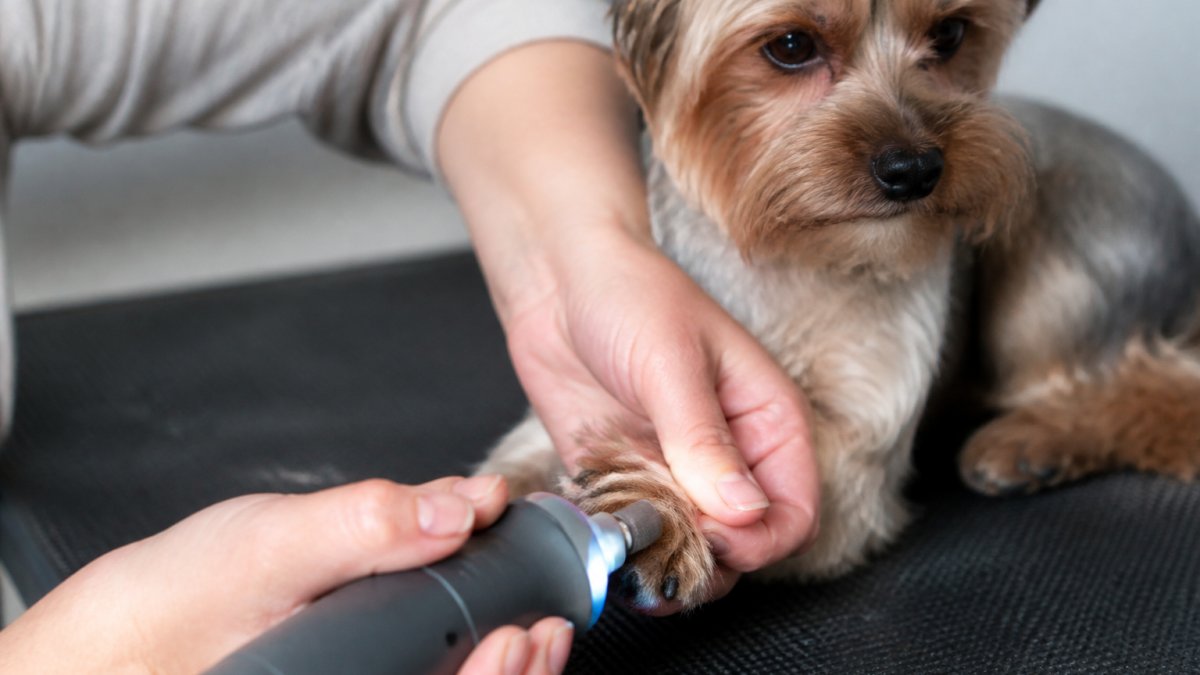
Hold your dog's paw firmly but gently, not so tight that they feel trapped. Use your non-dominant hand to stabilize the paw and gently spread the toes apart.
Position the grinder at a 45-degree angle to the nail. This angle allows the grinding head to contact the nail smoothly without catching the fur or skin. Start with light pressure.
Move the grinder in short strokes along the tip of the nail. Grind for 2-3 seconds, then pull back and check your progress.
Check the nail's underside too. Dark nails have a visible center dot when you look at the bottom, that's where the quick begins. Stop grinding before you reach that point.
Work on one paw completely before moving to the next. This keeps the session predictable for your dog. End on a positive note, even if you didn't finish all four paws.
Common Mistakes to Avoid
Grinding too aggressively is the most common error. New users often apply too much pressure, thinking they need to force the nail shorter. This heats up the nail and can burn the sensitive tissue inside.
Grinding the side of the nail instead of the tip is another frequent mistake. The sides have thinner walls and you hit the quick faster. Always work on the tip and underside.
Skipping the desensitization phase creates unnecessary stress. Jumping straight to grinding without letting your dog adjust to the sound and sensation often results in a dog that refuses grooming. Spending a week on preparation saves weeks of behavioral problems later.
Not checking the quick's location on dark nails leads to accidental injuries. Before you grind, look at the bottom of the nail. If you can't see where the quick starts, grind less than you think you need to.
How Often to Trim Dog Nails: A Practical Schedule
Most dogs need nail maintenance every 4-6 weeks. Dogs that walk on pavement regularly may need it less often because concrete naturally wears nails down. Indoor dogs or those that walk mostly on grass need more frequent trims.
The best indicator is sound. If you hear your dog's nails clicking on hard floors, they're overdue. If the nail curves noticeably or touches the ground when the paw is relaxed, trimming time has arrived.
Senior dogs often need more frequent trims because they're less active and nails grow faster. Puppies grow quickly and may need attention every 3-4 weeks during growth spurts.
Keep a simple calendar. Mark the date you grind nails and set a reminder for four weeks later. This consistency prevents the panic of severely overgrown nails and makes each session quicker.
Key Features to Evaluate When Choosing a Grinder
Motor Speed and Multiple Speed Settings
Motor speed determines how quickly the grinding head rotates and how much friction it generates. Faster isn't always better, a high-speed grinder on a thick nail can overheat the nail and cause discomfort.
Variable speed settings let you match the grinder to your dog's nails. Thicker nails benefit from higher speeds. Thin, sensitive nails work better at lower speeds. This flexibility also helps during the desensitization phase, you can start at the lowest speed while your dog adjusts.
The PawSmooth Pet Nail Grinder offers adjustable speeds so you control the grinding intensity. This means one tool works for puppies with soft nails, adult dogs, and seniors with brittle nails.
Grinding Ports and Nail Sizes
Different grinding ports accommodate different nail sizes. A grinder with only one port size forces you to work with nails that don't fit perfectly, reducing control and increasing the risk of hitting skin or fur.
Look for a grinder with at least two port sizes, one for small and medium nails, one for larger nails. This ensures good contact between the grinding head and the nail across all your dogs' sizes.
The grinding head itself should have smooth edges. Rough or sharp edges catch fur and skin. Quality grinders have polished grinding surfaces that contact only the nail.
Battery Life and Cordless Convenience
Cordless grinders offer freedom to move around and position yourself comfortably. A rechargeable battery that lasts through all four paws without dying mid-session is essential.
Most quality grinders run 60-90 minutes on a full charge, more than enough for regular home grooming. Check the charging time too. A grinder that takes eight hours to charge might not be ready when you need it.
Look for a grinder with a battery indicator so you know when to recharge. Running out of power mid-nail is frustrating and can stress your dog.
Durability and Replacement Parts
A grinder that fails after three months costs more in the long run than one that lasts years. Check whether the manufacturer offers replacement grinding heads, motors, and batteries. If parts aren't available, a broken grinder becomes trash.
The PawSmooth Pet Nail Grinder is built for longevity. This means your investment in learning to use the tool isn't wasted if a part wears out.
Read reviews specifically about long-term durability. Motors that overheat or grinding heads that wear unevenly are red flags. A grinder that performs well for the first month but deteriorates isn't a good value.
Safety First: Protecting the Quick and Avoiding Injury
The quick is the blood vessel and nerve inside the nail. Hitting it causes bleeding, pain, and lasting trauma around grooming.
Light-colored nails make the quick visible, you'll see a dark line inside the nail. Stop grinding when that line is barely visible at the tip.
If you do hit the quick and cause bleeding, stay calm. Your dog will sense panic and become more anxious. Apply gentle pressure with a clean cloth for 2-3 minutes.
Never grind the same nail twice in one session without a break. The friction heats the nail and can burn the tissue inside.
Keep the grinder moving. Holding it stationary on one spot generates excessive heat. Use short strokes and keep moving along the nail's surface.
Choosing the right tool for nail care transforms grooming from a source of stress into a manageable routine.
Frequently Asked Questions
Are dog nail grinders better than nail clippers?
Dog nail grinders and clippers serve the same goal but differ in method. Grinders smooth nails gradually with a rotating sanding band, while clippers cut them quickly. Many dogs find grinders less intimidating because there's no sudden pressure or sound of cutting. Grinders also reduce the risk of splitting nails, especially in dogs with brittle nails. However, clippers work faster for dogs comfortable with the process. Choose based on your dog's temperament and nail condition.
How often should I grind my dog's nails?
Most dogs need nail grinding every 4-6 weeks, though this varies by activity level and nail growth rate. Dogs that walk frequently on rough surfaces may need less frequent trimming because natural wear keeps nails shorter. Indoor dogs and those with slower nail growth may need grinding every 6-8 weeks. Check your dog's nails monthly by listening for clicking sounds on floors or observing if nails touch the ground when standing. Your veterinarian can recommend a schedule based on your dog's specific needs.
What should I look for in a quiet dog nail grinder?
Quiet operation is crucial for anxious dogs. LED lighting helps you see the nail clearly without needing to look closely, reducing your dog's stress. Multiple speed settings let you start slow during acclimation. The PawSmooth Pet Nail Grinder at $29.99 features a quiet motor designed specifically for nervous pets.
Can I use a dog nail grinder on small dogs safely?
Yes, but choose a grinder with multiple grinding ports or openings sized for small nails. Smaller dogs have thinner, more delicate nails that require a gentler touch and slower speeds. Start with the lowest speed setting to avoid overheating the nail or causing discomfort. Take shorter sessions, even 10-15 seconds per nail, to prevent stress. Always keep your fingers clear of the grinding head, and stop immediately if your dog shows signs of pain or anxiety. A grinder designed for multiple sizes gives you the flexibility to work safely across nail thicknesses.