


Table of Contents
- Why Dog Hair Sticks to Furniture and Why Removal Matters
- Best Pet Hair Remover Tools for Your Couch
- How to Get Dog Hair Off a Couch: Step-by-Step Method
- How to Get Dog Hair Out of Fabric: Fabric-Safe Techniques
- How to Keep Dog Hair Off Furniture: Prevention and Maintenance
- Common Mistakes to Avoid When Removing Pet Hair
- Frequently Asked Questions
Last Updated: October 12, 2026
Why Dog Hair Sticks to Furniture and Why Removal Matters
Dog hair clings to fabric because of static electricity and the texture of upholstered surfaces. Furniture fibers trap loose hair, especially in seams and cushion crevices where hair becomes deeply embedded. Understanding this helps you choose the right tool and method to remove dog hair from furniture effectively.
Pet hair buildup isn't just a cosmetic issue. It collects dust, dander, and allergens that affect air quality and can trigger allergies or asthma. Regular removal keeps your home cleaner and healthier for both you and your dog.
The good news: removing dog hair from furniture doesn't require expensive equipment or hours of work. A combination of the right tools and techniques can tackle even heavy shedding. Matching your method to your furniture type and hair amount makes all the difference.
Best Pet Hair Remover Tools for Your Couch
The right tool makes removing pet hair from your couch simple and efficient. Different tools work better for different situations, so having a small toolkit gives you options.
Rubber Squeegees and Gloves
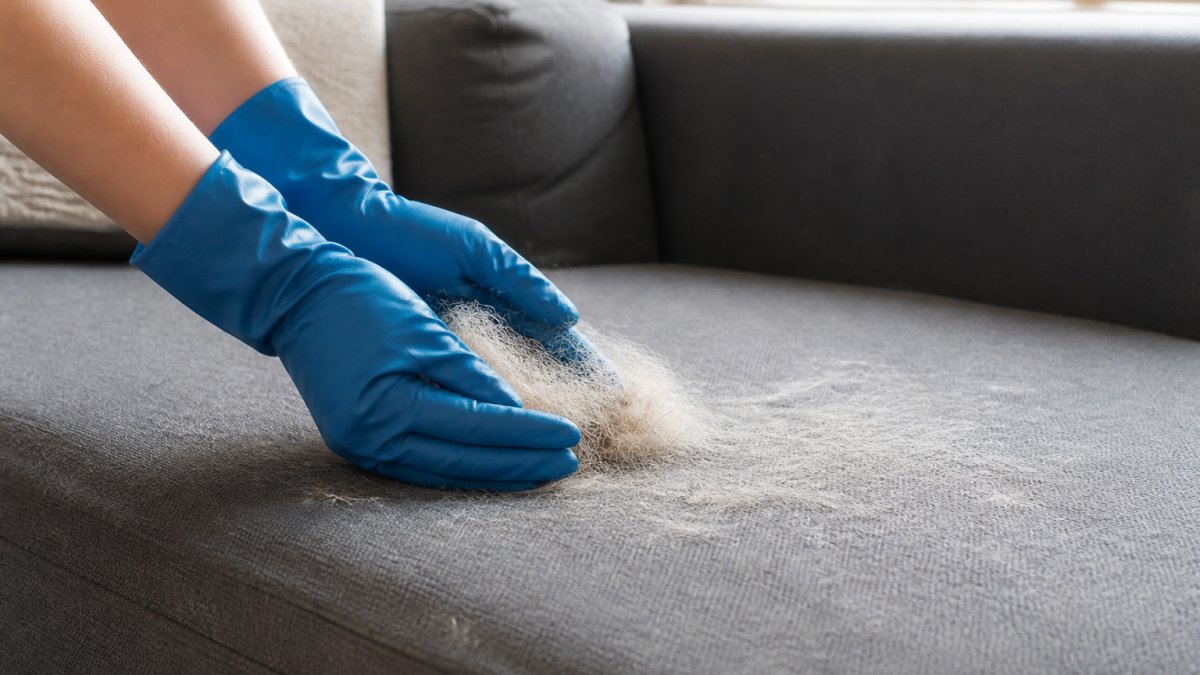
Rubber tools are among the most effective pet hair removers because they create friction that lifts hair without damaging fabric. A rubber squeegee or rubber glove works through static and mechanical action to gather loose hair into clumps.
Rubber squeegees are flat tools with a handle. You drag them across upholstery at a slight angle. The rubber blade grabs hair and rolls it into balls that you can easily pick up.
Rubber gloves offer more flexibility. Slip one on and rub your hand across the couch like you're petting your dog. The rubber creates the same static effect as a squeegee but gives you more control in tight spaces.
Both tools are reusable, affordable, and gentle on fabric. Rinse them under water to remove collected hair and let them dry. They last for years with basic care.
Lint Brushes and Furniture Rakes
Lint brushes and furniture rakes use bristles or teeth to comb hair out of fabric. A lint brush has short, dense bristles packed tightly together. A furniture rake has longer, spaced-out teeth designed specifically for upholstery.
These tools work by catching hair in their bristles or teeth, then lifting it away from the fabric. They're especially useful for textured couches where hair hides in the weave. Drag the brush or rake across the surface in one direction, then turn it over to empty the collected hair.
Furniture rakes sometimes have a button or lever that retracts the teeth, making it easier to release hair. This feature saves time compared to manually picking out each strand.
The downside: these tools can sometimes snag delicate fabrics. Test on a hidden area first if your couch has a loose weave or is made from silk or velvet.
Vacuum Attachments and Pet-Hair Specific Models
A vacuum with an upholstery attachment is a workhorse for removing pet hair from furniture. The suction pulls hair out of fabric more thoroughly than any manual tool. Upholstery attachments are flat with a wide mouth to cover more surface area.
Some vacuums include a pet-hair specific attachment with a motorized brush head. This rotating brush loosens hair before suction removes it. These models are more powerful than standard upholstery attachments and handle embedded hair better.
The trade-off: vacuums are louder and require more setup than hand tools. But if you have heavy shedding or large furniture, the time savings are worth it.
Check your vacuum's suction power. Older or lower-end models may not pull hair as effectively from dense upholstery. If your vacuum struggles, a hand tool might actually be faster.
How to Get Dog Hair Off a Couch: Step-by-Step Method
Removing dog hair from your couch works best when you follow a sequence. Start with dry methods, move to damp techniques if needed, then finish with seams and crevices.
Step 1: Start With Dry Removal Techniques
Begin with your couch completely dry. Dry hair lifts more easily than damp hair, so you'll finish faster.
Choose your tool based on your couch type. For smooth, tight-weave fabric, use a rubber squeegee. For textured upholstery, try a lint brush or furniture rake.
Work in sections. Divide your couch into manageable areas, one cushion, one armrest, one section of the back.
For rubber tools, use firm pressure and drag in one direction. Repeat 2-3 times on each section.
For brushes and rakes, use shorter strokes with steady pressure. Let the bristles or teeth do the work. Forcing the tool doesn't gather more hair; it just tires your arm.
Empty your tool frequently. A clogged brush or squeegee loses effectiveness. Take 10 seconds to remove collected hair and you'll work faster overall.
Step 2: Use Damp Methods for Embedded Hair
After dry removal, some hair stays embedded in the fabric. Damp methods work on this stubborn hair because moisture makes the fibers swell slightly, releasing trapped hair.
Dampen a lint brush or cloth with water. Don't soak it, just enough moisture to feel damp. Rub the damp brush across the couch in short strokes. The moisture combined with friction lifts hair that dry methods missed.
Alternatively, use a damp cloth alone. Rub it across the fabric with moderate pressure. Hair sticks to the damp cloth and you can wipe it off into a trash bin.
Work in the same sections as your dry pass. This prevents you from re-cleaning areas you've already finished.
Let the couch air dry completely before sitting on it. This typically takes 2-4 hours depending on humidity and ventilation. You can speed this up with a fan.
Step 3: Clean Seams, Cushions, and Crevices
Hair collects in seams where cushions meet the frame, in the crevices between cushions, and along piping. These spots require targeted attention because general tools can't reach deep into tight spaces.
Use a vacuum with a crevice attachment for seams and gaps. The narrow nozzle fits into tight spaces and suction pulls hair out. Make several passes along each seam.
For cushion covers that zip off, remove them and shake vigorously outside. Loose hair falls out easily. If covers are removable, check the care tag.
For piping (the cord trim along edges), use a small brush or old toothbrush. Gently brush along the piping to loosen trapped hair, then vacuum or wipe away debris.
If your couch has a skirt (fabric that hangs from the bottom), check underneath. Hair accumulates here too. Vacuum or brush this area during your cleaning session.
How to Get Dog Hair Out of Fabric: Fabric-Safe Techniques
Different fabrics need different care. Before using any tool or method, test it on a hidden area of your couch to ensure it won't damage the material.
Microfiber and synthetic blends are durable and work well with all removal methods. Rubber tools, brushes, and vacuums are all safe.
Velvet and suede require gentler handling. Never use rubber squeegees on these fabrics as they can crush the nap.
Leather couches don't trap hair the same way fabric does. Hair sits on the surface and is easy to wipe away with a damp cloth or soft brush.
Linen and cotton are sturdy but can snag. Use tools with care and avoid dragging repeatedly in the same direction.
Silk and delicate fabrics need the lightest touch. Use only a soft brush or damp cloth. Never use motorized tools or apply heavy pressure.
How to Keep Dog Hair Off Furniture: Prevention and Maintenance
Preventing hair buildup is easier than constant cleaning. A few simple habits keep your couch cleaner between deep cleaning sessions.
Groom your dog regularly. A grooming mitt like the Pawsome Grooming Mitt catches shedding hair directly from your dog's coat while you pet them.

Use furniture covers or throws. A washable blanket or furniture cover protects your couch and is easy to clean.
Establish a no-couch rule or designated pet zone. If your dog sleeps on a specific chair or area, you contain the shedding problem.
Vacuum or brush your couch weekly. A quick 10-minute maintenance session keeps hair from accumulating. This prevents the deep embedding that makes removal harder.
Keep humidity moderate in your home. Very dry air increases static, which makes hair cling more.
Wash removable covers every 2-3 weeks. Most pet owners don't think of this, but cushion covers trap hair inside.
Common Mistakes to Avoid When Removing Pet Hair
Rushing the process leads to incomplete hair removal. Take your time with each section.
Using only one method on all furniture types wastes time and can damage delicate fabrics.
Waiting too long between cleaning sessions makes removal harder. Hair embeds deeper over time.
Cleaning wet fabric is ineffective. Moisture makes hair stick to fabric instead of lifting away. Always start with dry removal.
Ignoring seams and crevices leaves visible hair. These spots collect the most hair and are often forgotten.
Overloading your vacuum or brush reduces suction and effectiveness. Empty your tool frequently.
Using harsh tools on delicate fabric damages the material. Not all removal methods work on all couches.
Not grooming your dog regularly means constant hair shedding onto furniture. Prevention through regular grooming saves hours of cleaning time.
Keeping your couch free of dog hair takes the right combination of tools and technique.
The Pawsome Grooming Mitt makes prevention simple by catching loose hair directly from your dog's coat during regular petting. Combined with weekly furniture maintenance, you'll spend less time cleaning and more time enjoying your couch with your furry friend. SHOP PAWSOME PRODUCTS and tackle dog hair removal with confidence.
Frequently Asked Questions
What's the most effective tool for removing dog hair from upholstery?
Rubber squeegees and rubber gloves rank among the most effective tools because they create static that lifts embedded hair without damaging fabric. Vacuum attachments designed for pet hair also work well for loose hair, while lint brushes and furniture rakes excel at gathering hair from seams and crevices. The best choice depends on your fabric type and how embedded the hair is. Try starting with a rubber tool for stubborn buildup, then follow with vacuuming to catch remaining loose hair.
How do I remove dog hair from furniture without damaging the fabric?
Always test any tool on a hidden area first. For delicate fabrics, use soft-bristled brushes or rubber gloves rather than rakes or scrapers. Avoid excessive pressure with squeegees, which can pull threads. Damp methods work well on sturdy upholstery but should be used sparingly on delicate materials. For removable cushion covers, check the care label and consider machine washing if allowed. When in doubt, use gentler dry methods like lint brushes before progressing to more aggressive techniques.
Can I use a regular vacuum to remove dog hair from my couch?
A regular vacuum can help, but pet-hair attachments are far more effective because they're designed to lift hair from fabric without pulling threads. Standard vacuum heads often miss embedded hair and can damage upholstery if the suction is too strong. If you must use a standard vacuum, use the lowest suction setting and a soft brush attachment. For best results, invest in an upholstery or pet-hair attachment, or use dry removal methods like rubber tools first to loosen hair before vacuuming.
How often should I clean dog hair from furniture to prevent buildup?
Daily grooming with a pet hair remover like the Pawesome Grooming Mitt reduces shedding directly from your dog's coat, preventing hair from reaching furniture in the first place. For furniture itself, light vacuuming or brushing 2-3 times per week prevents visible buildup on most couches. Heavy shedders may need daily attention during shedding season. Removable cushion covers should be washed weekly if possible. Regular prevention is far easier than deep cleaning heavily soiled upholstery.