


Last Updated: October 29, 2026
Quick Summary
Professional grooming is not necessary for every dog. Short-coated dogs often do fine with brushing, baths and nail care at home. Dogs with long, curly or double coats usually benefit from regular professional visits, because loose hair can turn into mats that pull on the skin.
- Short coats are often manageable at home with brushing and nail care.
- Long, curly or double coats often benefit from regular professional work.
- Dematting and sanitary trims are professional tasks, since mats can hide infections.
- Curly or continuously growing coats typically need professional visits every 4 to 6 weeks.
- Book the next appointment before leaving the salon to keep coats from matting.
Table of Contents
- Do All Dogs Need Professional Grooming?
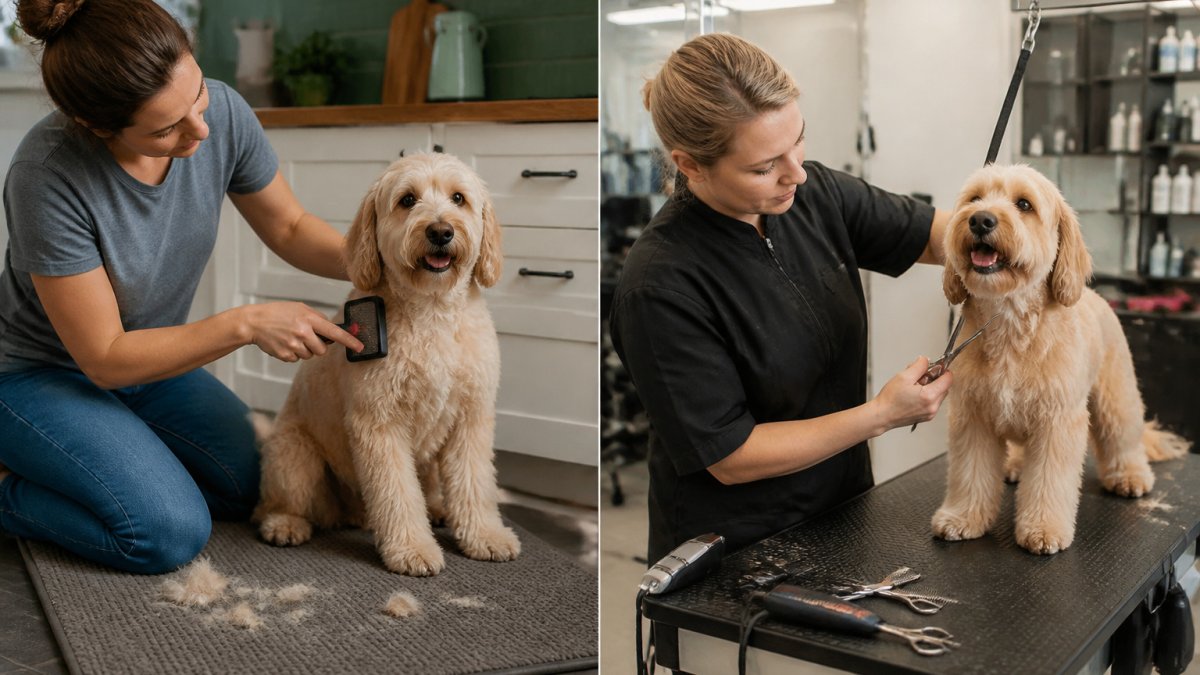
- Dog Grooming at Home vs Professional Grooming
- Dog Breeds That Need Professional Grooming
- How Often Should Dogs Be Professionally Groomed?
- At-Home Dog Grooming Tools That Cover the Basics
- Grooming Anxious, Senior, and Medically Sensitive Dogs
- Choosing Your Next Grooming Step for Your Dog
- Frequently Asked Questions
Is professional grooming necessary for dogs? This guide is here to help you decide. The short answer is that it depends on your dog's coat, temperament and your ability to keep up with maintenance at home. Some dogs do fine with a brush and a bath, while others truly need a groomer to stay healthy and comfortable.
Do All Dogs Need Professional Grooming?
Not every dog needs a professional groomer on a set schedule. A short-coated dog may only need regular brushing, occasional baths and nail trims at home. Dogs with long, curly or double coats usually need more attention, because loose hair can turn into mats that pull on the skin.
Here is a quick way to think about it:
- Short coat: Often manageable at home with brushing and nail care
- Long or curly coat: Often benefits from regular professional work
- Double coat: Needs thorough brushing to remove dead undercoat
- Anxious or senior dog: May do better with a calm, experienced groomer
The real question is whether you can keep the coat clean, tangle-free and comfortable between visits. For a closer look at tools that handle basic maintenance, see the durable pet grooming tools buyer's guide.
Dog Grooming at Home vs Professional Grooming
Most owners do not face a binary choice. The useful question is which grooming tasks you can safely and consistently handle at home, and which ones are better booked with a professional. The table below breaks it down by task, with the practical reason behind each recommendation.
| Task | Home-friendly? | Why |
|---|---|---|
| Routine brushing (short coat) | Yes | Low risk; builds a habit and lets you spot skin changes |
| Routine brushing (long, curly, or double coat) | Partly | Daily brushing prevents mats, but dematting a settled mat is a pro job |
| Bathing | Yes, with caveats | Use a dog-formulated shampoo and dry thoroughly, especially in double coats |
| Nail trimming | Yes, if you learn technique | Cutting past the quick causes pain and bleeding; a grinder reduces the risk |
| Ear cleaning | Yes, for routine wiping | Do not push anything into the ear canal; see a vet for odor, discharge, or head shaking |
| Sanitary trim | Usually professional | Clippers near sensitive skin; a nick is easy to make and hard to treat |
| Full clip or breed-standard trim | Professional | Requires clipper technique, blade knowledge, and safe restraint |
| Dematting | Professional | Mats pull on skin and hide infections; cutting them out at home risks lacerations |
| Anal gland expression | Veterinarian or trained groomer | Improper expression can cause injury or infection |
Pros of at-home grooming:
- Lower ongoing cost, since a basic set of brushing and nail tools is usually a one-time purchase
- Flexible schedule and no car-ride stress for dogs who dislike travel
- You notice small changes (a new lump, a hot spot, a bad tooth) earlier because you handle the dog weekly
Cons of at-home grooming:
- Mats close to the skin are easy to miss until they are tight
- Nicks from clippers and nails cut too short are common DIY injuries
- Dense or double coats can overwhelm home dryers, leaving damp undercoat that grows bacteria or fungus
Pros of professional grooming:
- Experienced handling of tough coats, including dematting and safe clipping
- High-velocity dryers that dry the undercoat fully, not just the surface
- Skin, ear, and nail checks during the visit, groomers often catch issues owners miss
Cons of professional grooming:
- Higher cost per visit, which varies with the dog's size and coat condition
- Can be stressful for anxious dogs, especially in busy salons
- Requires booking ahead, and matted dogs may be charged a dematting fee or shaved down for welfare reasons
A workable pattern for many owners is a hybrid: brush and handle paws, ears, and teeth at home several times a week, and book a professional every four to eight weeks for bathing, drying, clipping, and nail work. That split keeps the coat from reaching the point where a groomer has to shave it, which is the outcome most owners want to avoid.
Dog Breeds That Need Professional Grooming
Breeds with long, dense or continuously growing coats often need professional help. Poodles, Bichon Frises, Shih Tzus and many doodle mixes fall into this group. Their hair keeps growing and can mat quickly if left alone.
Heavy-shedding breeds also benefit from regular grooming, even though they may not need clipping. Owners of shedding dogs can compare tool recommendations for shedding dogs to find the right brush or rake. A professional can remove loose undercoat more thoroughly than most owners can at home.
How Often Should Dogs Be Professionally Groomed?
A single interval does not fit every dog. The schedule below separates professional appointments from the at-home tasks that keep the coat from reaching the point where a groomer has to shave it. Treat these as starting points and adjust for coat growth, shedding season, and your dog's lifestyle.
Professional appointments by coat type:
| Coat type | Typical professional interval | Notes |
|---|---|---|
| Short, smooth coat (e.g., Beagle, Boxer) | Every 8-12 weeks, or as needed | Often just baths and nails; many owners skip professional visits entirely |
| Medium double coat (e.g., Labrador, Husky) | Every 6-10 weeks, more often during seasonal blowouts | Deshedding treatments help during spring and fall coat blows |
| Long silky coat (e.g., Shih Tzu, Yorkie) | Every 4-6 weeks | Hair grows continuously and mats quickly behind ears and under legs |
| Curly or continuously growing coat (e.g., Poodle, Bichon, Doodle) | Every 4-6 weeks | Clipping is required; waiting longer than 8 weeks often means shaving |
| Hand-stripped terrier coats | Every 6-12 weeks with a specialist | Not every groomer offers hand-stripping |
At-home task cadence between appointments:
- Brushing: Daily for long and curly coats; two to three times a week for double coats; weekly for short coats
- Bathing: Every 4-8 weeks with a dog-formulated shampoo; more often only if a veterinarian advises it, since over-bathing strips skin oils
- Nail trimming or grinding: Every 2-4 weeks; if you hear nails clicking on hard floors, they are overdue
- Ear checks and wiping: Weekly, or after swimming; use a vet-approved cleaner and never push into the canal
- Teeth brushing: Daily is ideal; several times a week is a realistic minimum
Signs a professional visit is overdue:
- Tangles behind the ears, under the collar, or in the armpits that a comb will not pass through
- A coat that feels damp or cool at the skin after a bath, which suggests the undercoat did not dry
- Nails clicking on tile or hardwood
- A strong odor that returns within days of a bath
- Head shaking, ear scratching, or redness in the ear canal
- New lumps, scabs, or hot spots you cannot see through the coat
When to shorten the interval:
- Seasonal shedding: double-coated dogs often need an extra deshedding appointment in spring and fall
- Senior or arthritic dogs: shorter, more frequent sessions are easier than long ones, and a groomer can work in stages
- Dogs who swim or hike in wet terrain: more frequent ear checks and baths to prevent moisture-related skin issues
- Anxious dogs: shorter, more frequent visits with the same groomer build familiarity better than infrequent marathon sessions
If mats keep returning before the next scheduled visit, the interval is too long or the at-home brushing routine is not keeping up. Adjust one variable at a time, either add a brushing session or shorten the professional interval, rather than waiting for the coat to dictate the schedule.
At-Home Dog Grooming Tools That Cover the Basics
You do not need a large kit to handle basic maintenance. A few reliable tools cover most needs:
- Slicker brush: Removes loose hair and light tangles
- Undercoat rake: Pulls out dead undercoat on double-coated dogs
- Grooming mitt: Collects loose fur while you pet your dog. The Pawesome Grooming Mitt is a simple option for everyday shedding, letting you slip it on, pet your dog as usual, and catch loose fur.
- Nail grinder: A gentler alternative to clippers for many dogs
For nail care, the PawSmooth Pet Nail Grinder is designed to trim gently with a quiet motor and an LED light, with several speeds and openings for different pet sizes.


Grooming Anxious, Senior, and Medically Sensitive Dogs
Anxious dogs often do better with short, calm sessions at home. Use treats, take breaks and stop before your dog gets overwhelmed. Senior dogs may have sore joints, so brush them on a soft surface and keep sessions brief.
Dogs with skin conditions, lumps or other medical concerns should see a veterinarian before any grooming that involves clipping or heavy brushing. A groomer can be helpful, but tell them about any health issues up front.
Choosing Your Next Grooming Step for Your Dog
Start by checking your dog's coat and how much work it needs each week. If brushing keeps up, you may only need occasional professional help. If mats keep returning, booking a groomer is likely the better move.
When choosing a groomer, ask about their experience with your dog's breed, how they handle anxious pets and whether they check the skin during the visit. A good groomer will explain what they plan to do before they start.
Frequently Asked Questions
Which dog breeds don't need professional grooming?
Dogs with short, smooth coats such as Beagles, Boxers, and most Dachshunds usually need little professional grooming. A weekly brushing to remove loose hair, occasional bathing, and regular nail trims at home are often enough. Owners should still check ears, teeth, and paws during routine care, because a short coat does not remove the need for basic hygiene. Breeds with single coats that shed seasonally may benefit from a professional deshedding session once or twice a year.
What happens if you don't groom a dog?
Without regular grooming, loose and dead hair builds up and can form mats that pull on the skin and trap moisture. Mats can cause skin irritation, hot spots, and infections, and severe matting may require shaving the dog. Nails that go untrimmed can overgrow, change the way a dog walks, and cause discomfort. Ears that are not checked can collect wax and debris. Regular brushing with the right tool for the coat prevents most of these problems.
How often should a dog go to a professional groomer?
Most dogs with long or curly coats need a professional visit every 4 to 8 weeks to prevent matting and maintain trimming. Dogs with double coats may need a professional appointment every 8 to 12 weeks, and short-coated dogs may only need one or two visits a year. The right schedule depends on coat type, activity level, and how well the owner maintains the coat between visits. Owners can ask their groomer to recommend a plan after the first appointment.
Can I groom my dog at home instead of using a professional?
Many owners can handle brushing, bathing, nail trimming, and ear checks at home, especially for short or moderate coats. Clipping, hand stripping, and trimming around the face or paws are harder to do safely, and mistakes can cause cuts or skin injury. The PawSmooth Pet Nail Grinder, priced at $29.99, is designed to trim gently with a quiet motor and an LED light. Owners who are unsure should book a groomer for a first session and watch how the work is done.
Ready to build your at-home routine? Shop Pawsome Products and find tools that make everyday care simpler. Every order ships free worldwide and is backed by a 60-day money-back guarantee.
