


Table of Contents
- Why the Right Grooming Tools Matter for Shedding Dogs
- Understanding Your Dog's Coat Type and Shedding Pattern
- Best Brush for Dogs with Undercoat Removal
- Best Dog Brush for Shedding: Choosing by Coat Length
- How Often to Brush a Shedding Dog for Best Results
- How to Reduce Dog Shedding: Technique and Routine
- Common Mistakes That Make Shedding Worse
- When Excessive Shedding May Signal a Health Issue
- Frequently Asked Questions
Last Updated: October 16, 2026
Why the Right Grooming Tools Matter for Shedding Dogs
Shedding is one of the biggest challenges dog owners face. Hair ends up on furniture, clothes, and floors, but the real issue isn't just mess: the wrong approach can damage your dog's coat or miss the loose fur entirely.
The best grooming tools for shedding dogs make shedding manageable. They remove loose hair before it falls out naturally, protect your dog's skin and coat health, and turn grooming into bonding time.
At Pawsome Finds, we focus on tools designed to tackle shedding at the source. Understanding your dog's coat type, using the right technique, and maintaining a consistent routine are key.
Understanding Your Dog's Coat Type and Shedding Pattern
Not all dogs shed the same way. Coat type determines which tools will work best and how often you need to groom.
Double Coats and Heavy Shedding Breeds
Double-coated dogs have two layers: a dense undercoat and longer guard hairs on top. This structure traps loose fur, which is why heavy-shedding breeds like German Shepherds, Golden Retrievers, Huskies, and Labs shed so much.
The undercoat sheds year-round but intensifies during seasonal transitions, when loose fur accumulates quickly. Without the right tools, you'll never reach that undercoat, and the fur keeps shedding onto your home.
Breeds with double coats need tools designed for undercoat removal. An undercoat rake or de-shedding tool is essential; a slicker brush alone won't penetrate deep enough to make a real difference.
Short-Haired vs. Long-Haired Dogs
Short-haired dogs shed less visibly but still need regular grooming. Their loose fur sits closer to the skin, so a grooming mitt or soft brush removes it easily, and shedding stays consistent year-round.

Long-haired dogs show shedding more obviously, and loose hair tangles and mats if not removed regularly. They benefit most from undercoat rakes and slicker brushes that reach through the longer guard hairs to the dense undercoat below.
Best Brush for Dogs with Undercoat Removal
The best grooming tools for shedding dogs target the undercoat specifically, where most of the loose fur lives. But "undercoat tool" is not one product category, it is four, and each removes hair through a different mechanism. Picking the wrong one is the most common reason owners feel like they are brushing constantly without making a dent.
Undercoat Rakes and De-Shedding Tools
An undercoat rake has short, closely spaced metal teeth on a rigid or slightly flexible head. The teeth slip past the longer guard hairs and comb through the dense inner layer, catching loose undercoat and pulling it free.
De-shedding tools use a single row of fine teeth or a curved blade edge rather than a full rake. Many models include a push-button mechanism that ejects collected fur, the feature most owners end up caring about.
Use an undercoat rake with gentle, short strokes. Work in the direction of hair growth. Don't press hard, let the tool do the work. You'll be surprised how much loose fur comes out with minimal pressure.
Slicker Brushes and Grooming Mitts
A slicker brush has fine, short wires set close together on a flat or slightly curved pad. It removes loose fur from both the undercoat and outer coat and is the tool most owners reach for first because it feels gentle. It is especially useful for long-haired dogs, where the wires reach through the longer guard hairs.
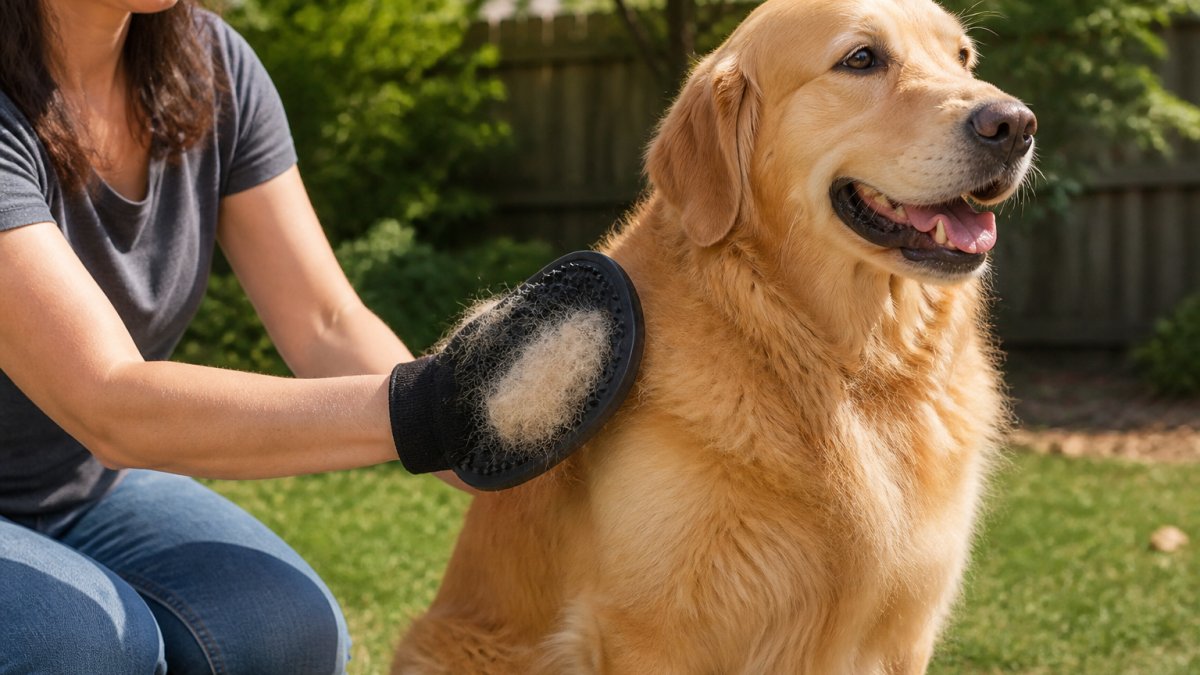
A grooming mitt takes a different approach: you slip it on like a glove and pet your dog normally, and the textured surface catches loose fur as you go. It is gentle on skin and requires no special technique, making it the best entry point for short-coated dogs, anxious dogs, and puppies still learning to tolerate handling.
Matching the Tool to the Coat, Not the Breed
Breed lists are a shortcut, but coat type is the real decision variable. Two German Shepherds can have very different coat densities, and a mixed-breed dog rarely fits a single breed profile.
- Single coat, short hair (for example, a Beagle or Boxer): a rubber curry or grooming mitt is usually enough. A slicker brush handles loose surface hair. Skip the rake.
- Single coat, long hair (for example, a Poodle or Yorkie): a slicker brush plus a metal comb for the feathering. Undercoat rakes do nothing here because there is no undercoat to reach.
- Double coat, short-to-medium hair (for example, a Labrador or Husky): an undercoat rake is the primary tool, with a slicker brush as a follow-up pass.
- Double coat, long hair (for example, a Golden Retriever or German Shepherd): start with the rake, follow with the slicker, and finish with a comb to check for missed tangles.
- Curly or continuously growing coat (for example, a Poodle or Doodle): a slicker brush and metal comb, used line by line down to the skin. Rakes and de-shedding blades can cut or damage curls.
What to Look For in Any Undercoat Tool
Four features separate a tool you will keep using from one that ends up in a drawer:
- Tooth or wire condition. Rounded tips reduce scratching. Bent or rusted teeth snag hair and should be replaced.
- Handle grip. Shedding sessions run 15 to 30 minutes, and a handle that slips when your hands get oily makes the job harder.
- Fur release. Self-cleaning or push-button ejection saves real time. On a Husky in blowout, you may empty the tool a dozen times in one session.
- Size relative to your dog. A rake sized for a Great Pyrenees is unwieldy on a Corgi. Match the head width to the area you are working.
AVMA guidance on routine grooming and coat care
None of these tools replace the others. The most effective shedding kits pair one undercoat remover with one finishing brush and one comb, then rotate based on the season and the coat in front of you.
Best Dog Brush for Shedding: Choosing by Coat Length
Coat length changes which tool should be your primary choice.
For short-haired dogs, a grooming mitt or soft slicker brush handles most shedding without deep undercoat work. A mitt is especially useful because it's simple and feels like normal petting.
For long-haired dogs, start with an undercoat rake to reach the dense inner layer, then follow with a slicker brush for the outer coat. This two-step approach catches more loose fur than either tool alone.
For dogs with extremely dense undercoats, like Huskies or German Shepherds, an undercoat rake becomes essential. A mitt or slicker brush alone will leave you frustrated; the rake actually reaches the source of the problem.
How Often to Brush a Shedding Dog for Best Results
Frequency depends on your dog's coat type and shedding cycle.
During normal periods, brush short-haired dogs 1-2 times per week, long-haired dogs 2-3 times per week, and heavy-shedding breeds like German Shepherds or Golden Retrievers 3-4 times weekly to stay ahead of loose fur.
During seasonal shedding transitions, increase frequency. Many owners move to daily grooming for 2-4 weeks when their dog is shedding heavily, which prevents massive accumulation and keeps loose fur off furniture.
The key is consistency. Regular brushing removes loose fur before it falls out naturally; sporadic grooming leaves too much in the coat, which ends up on your floors and furniture.
How to Reduce Dog Shedding: Technique and Routine
Knowing which tools to use matters less than using them correctly.
Safe Grooming Technique and Warning Signs
Start grooming sessions when your dog is calm. Never brush aggressively or when your dog is anxious; gentle, consistent pressure works better than force.
Work in the direction of hair growth. Brushing against the grain can cause discomfort and damage the coat, so use short, controlled strokes rather than long sweeping motions.
Watch for warning signs of discomfort. If your dog flinches, pulls away, or shows skin irritation, stop immediately. Redness, flaking, or excessive scratching after grooming means you're pressing too hard or the tool isn't suited to your dog's coat.
Never brush a matted coat aggressively. Mats should be gently worked apart or trimmed out by a professional groomer; forcing a brush through mats causes pain and can damage the skin underneath.
Building a Complete Grooming Routine
A complete routine includes multiple steps. Start with an undercoat rake if your dog has a double coat, working through the entire coat in sections, thorough but gentle.
Follow with a slicker brush to catch remaining loose fur and smooth the coat, ensuring you haven't missed any loose undercoat.
End with a grooming mitt for a final pass and to check your work.
Schedule sessions for times when your dog is calm and you're not rushed; a stressed groomer produces a stressed dog. Set aside 15-30 minutes depending on coat size and type.
Make grooming part of your regular routine, not something you do only when shedding becomes unbearable. Consistent grooming prevents the buildup that makes shedding feel overwhelming.
Common Mistakes That Make Shedding Worse
Most dog owners make predictable mistakes that actually increase shedding problems.
Using the wrong tool is the biggest error.
Grooming too infrequently is equally problematic. Waiting until your dog is shedding heavily means loose fur has already accumulated, mats form, and grooming becomes difficult.
Brushing against the grain damages the coat and causes discomfort, making your dog resistant to future sessions.
Pressing too hard with undercoat rakes or slicker brushes can irritate skin. Tools should glide through the coat, not dig into it.
Ignoring seasonal shedding cycles leads to massive loose fur accumulation. Many owners don't adjust their grooming frequency when shedding increases, then are shocked by the amount of hair everywhere.
When Excessive Shedding May Signal a Health Issue
Normal shedding is manageable with the right tools and routine. Excessive shedding that doesn't improve with grooming might indicate a health problem.
Allergies cause excessive shedding. If your dog is scratching frequently or losing hair in patches, consult your veterinarian.
Stress and anxiety increase shedding. If shedding increases suddenly without a seasonal explanation, consider whether your dog's environment has changed.
Poor nutrition affects coat health.
Hormonal imbalances cause excessive shedding. Thyroid problems, for example, can make a dog shed far more than normal.
The difference between normal and excessive shedding is whether grooming helps.
Managing shedding doesn't require expensive professional grooming or complicated routines. The right tools and consistent technique handle most of the work.
Frequently Asked Questions
Does brushing your dog's hair help with shedding?
Yes. Regular brushing removes loose fur from the undercoat before it falls onto your furniture and clothes. For heavy-shedding breeds like Huskies, German Shepherds, and Golden Retrievers, brushing 3-4 times weekly during shedding seasons can reduce the amount of hair shed around your home by 50% or more. The key is reaching the undercoat with the right tool.
Which brush is best for a dog with a thick undercoat?
Undercoat rakes and de-shedding tools are most effective for dense undercoats. These tools have short, fine teeth spaced closely together that penetrate the undercoat without damaging the topcoat. For dogs with double coats, an undercoat rake used 2-3 times weekly during transition seasons will remove far more loose hair than a standard slicker brush alone.
Can a de-shedding tool damage a dog's coat or skin?
De-shedding tools are safe when used correctly with gentle, short strokes following the direction of hair growth. Never press hard or rake against the skin. If your dog shows signs of irritation (redness, scratching, or reluctance), stop and switch to a gentler tool like a grooming mitt. Always check for mats before using any grooming tool, as matted hair can trap tools against the skin.
How often should you brush a shedding dog?
During peak shedding seasons (spring and fall), brush 3-4 times weekly. Outside those periods, 1-2 times weekly is usually sufficient for heavy-shedding breeds. Dogs with short coats may need less frequent brushing, while long-haired dogs benefit from daily grooming during transition seasons to prevent matting and catch loose hair before it sheds.