


Last Updated: October 30, 2026
Quick Summary
Can dogs ride in the front seat? Technically yes in most places, but the safer answer is no. The front passenger seat puts your dog directly in the path of a deploying airbag, and that airbag was designed for a human body, not a dog's.
- Most pet-related citations are written under distracted driving statutes, not animal welfare laws.
- Even a harness won't save a dog in the front seat if the airbag fires.
- Many vehicles let you turn off the front passenger airbag with a key switch or menu setting.
- Choose a crash-tested harness with metal hardware and a snug fit, never attached to the collar.
- Never feed a large meal right before travel, and take breaks on long drives.
Table of Contents
- Can Dogs Ride in the Front Seat? The Short Answer
- What State Laws Say About Dogs in the Front Seat
- Front Seat Airbag Dog Safety: What Happens in a Crash
- The Safest Place for Dog in Car: Why the Back Seat Wins
- Choosing a Dog Seat Belt Harness That Fits and Holds
- Crates, Carriers, and Backseat Extenders Compared
- How to Keep Dog Comfortable During Car Rides
- Matching Restraint Gear to Your Dog's Size and Needs
- Frequently Asked Questions
Can Dogs Ride in the Front Seat? The Short Answer
Can dogs ride in the front seat? Technically yes in most places, but the safer answer is no. The front passenger seat puts your dog directly in the path of a deploying airbag, and that airbag was designed for a human body, not a dog's. The front seat is the riskier spot for pets whenever a safer option exists.
The risks stack up fast: airbag force, dashboard impact, and a driver who takes their eyes off the road to manage a moving animal. Below, you'll find an overview of where the law stands, what happens in a crash, and how to set up a back seat that protects your dog.
What State Laws Say About Dogs in the Front Seat
The legal exposure comes from three overlapping layers: distracted driving laws, animal-restraint provisions, and general careless/reckless driving statutes. Because these are enforced at the state level, the practical answer to "can dogs ride in the front seat" depends on where you drive.
Here is how the main patterns break down, with links to the primary sources you can check for your own state:
- Distracted driving statutes. Most citations involving a pet fall here. A dog on your lap, climbing between seats, or blocking your view can be treated as a distraction. New Jersey's distracted driving law is the most frequently cited example because it explicitly covers activities that interfere with safe operation. See the Governors Highway Safety Association state distracted driving law summary for a state-by-state index.
- Lap-riding prohibitions. Some states restrict pets from sitting on the driver's lap. Check your state's rules before you travel.
- Restraint requirements. Some states require pets to be secured in some form while traveling, and a few localities add their own ordinances. These rules rarely specify "front seat" versus "back seat", they focus on whether the animal is contained.
- Careless driving catch-alls. Even without a pet-specific rule, an officer can cite a driver under a general careless or reckless driving statute if an unrestrained dog contributes to unsafe operation.
Distracted Driving Rules That Apply to Pets
Most pet-related citations are written under distracted driving statutes, not animal welfare laws. The mechanism is straightforward: if your dog pulls your attention from the road, blocks your view, or interferes with the controls, the officer has grounds to cite you. In a crash, that citation can also support a negligence claim against you.
The Governors Highway Safety Association overview of distracted driving laws tracks how states handle these cases. Because enforcement varies by officer and jurisdiction, the safest legal posture is the same as the safest physical posture: restrain the dog in the back seat.
Why the Legal Answer Is Only Half the Answer
A state may permit a dog in the front seat and still leave you exposed to liability if an unrestrained animal contributes to a collision. Insurance adjusters and plaintiff's attorneys routinely point to an unrestrained pet as evidence of negligence. So the legal question ("is it allowed?") and the risk question ("is it wise?") have different answers, and the risk answer is the one that protects your dog and your wallet.
Front Seat Airbag Dog Safety: What Happens in a Crash
Front seat airbag dog safety comes down to physics. A dog sitting in that seat absorbs the full force, often against the chest and head. Small dogs can be thrown into the dashboard. Larger dogs can become projectiles that hit the driver.
Even a harness won't save a dog in the front seat if the airbag fires. The safest move is to keep your dog out of that seat entirely.
How to Check and Disable the Passenger Airbag
Many vehicles let you turn off the front passenger airbag, usually with a key switch in the glovebox or a menu setting. Check your owner's manual for the exact steps. Some cars only allow it when a child seat is detected.
Watch out: never disable an airbag and leave a human passenger in that seat. The switch is for child seats and pets, not adults.
The Safest Place for Dog in Car: Why the Back Seat Wins
The back seat is generally a safer place for a dog in a car than the front, ideally secured with a harness or crate. Keeping your dog in the back seat keeps it away from the driver's controls.
Pawsome PawCruiser™ Backseat Extender →
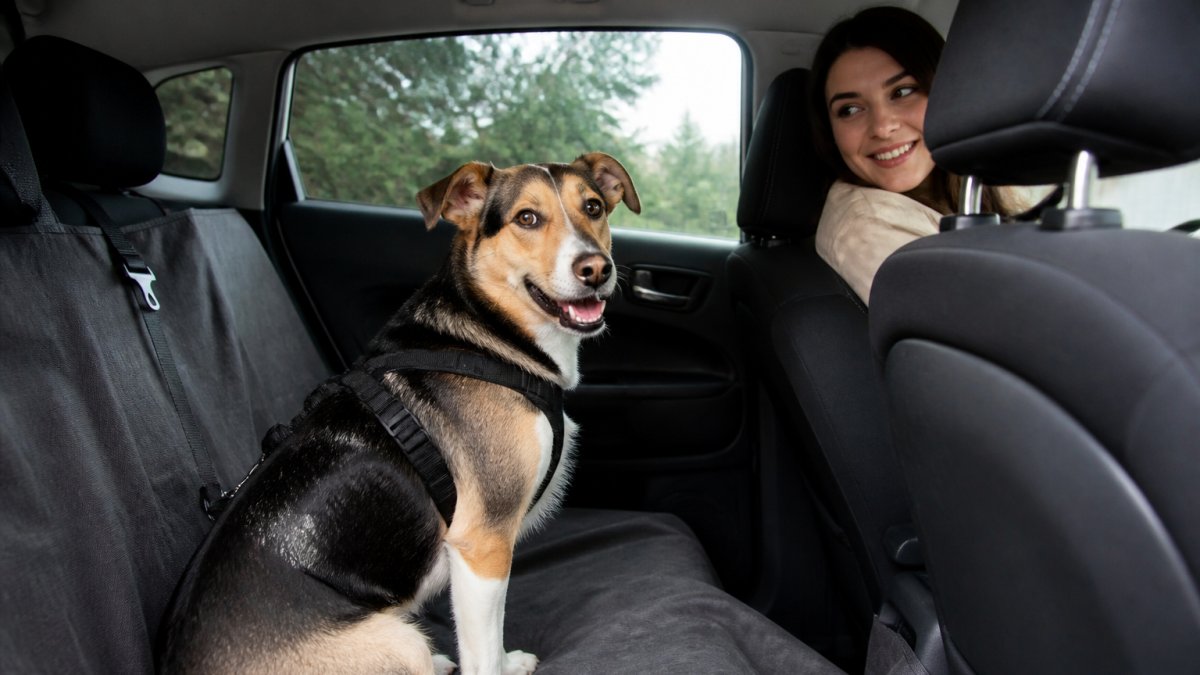
A back seat setup also reduces distracted driving. Your dog stays put, you keep your eyes forward, and everyone arrives calmer. If you want to make that back seat secure and comfortable, our Pawsome PawCruiser™ Backseat Extender is designed to make back-seat travel easier.

Choosing a Dog Seat Belt Harness That Fits and Holds
A dog seat belt harness is only useful if it fits correctly and holds up in a crash. Look for these features:
- Crash-tested certification from an independent lab
- Wide, padded straps that spread force across the chest
- Metal hardware, not plastic buckles
- A snug fit with room for two fingers under each strap
- No attachment to the collar, which can injure the neck
Measure your dog's chest girth and weight before buying. For detailed sizing steps, see our guide on how to choose the right dog car harness size.
Crates, Carriers, and Backseat Extenders Compared
Each option suits a different dog and vehicle. Here's how they stack up:
| Option | Best For | Key Strength | Watch Out For |
|---|---|---|---|
| Crash-tested harness | Most dogs | Keeps dog in place, easy to use | Needs correct fit |
| Secured crate | Large dogs, anxious dogs | Contains dog fully | Takes up space |
| Carrier | Small dogs, cats | Portable | Must be strapped down |
| Backseat extender | All sizes | Comfort plus barrier | Pair with a restraint |
Crates can suit dogs that settle in enclosed spaces, and carriers can suit small pets. For a deeper look, read our comparison of a dog seat belt vs travel crate.
How to Keep Dog Comfortable During Car Rides
Comfort and safety go together. A calm dog is less likely to struggle against a restraint. Try these steps:
- Exercise your dog before the trip.
- Secure the harness or crate before you start the engine.
- Crack a window for airflow, but not enough to jump through.
- Bring a familiar blanket or toy.
- Take breaks on long drives.
- Never feed a large meal right before travel.
For more techniques, see our full guide on how to calm your dog during travel.
Matching Restraint Gear to Your Dog's Size and Needs
One setup does not fit every dog. Match gear to size, age, and temperament:
- Small dogs: a padded harness plus a booster that keeps them off the airbag path
- Large dogs: a crash-tested harness or a secured crate
- Senior or arthritic dogs: a low-entry extender with soft bedding
- Anxious dogs: a covered crate or a snug extender that limits movement
And if the back seat is full, a secured crate in the cargo area beats an unrestrained front seat every time.
Frequently Asked Questions
Can a dog ride in the front seat with the airbag turned off?
Some vehicles let you switch off the passenger-side airbag with a key or a dashboard setting, and that removes the biggest front-seat hazard. It does not make the front seat the safest spot, though. A dog still becomes a projectile in a collision and can distract the driver. If you must use the front seat, check your owner's manual for the airbag switch, use a crash-tested harness, and keep the dog as far from the dashboard as the seat allows.
Is it illegal to let a dog ride in the front seat?
No state bans dogs from the front seat outright. What many states do have are distracted driving laws and animal restraint rules that a loose dog can violate. Some states specifically prohibit animals from sitting on a driver's lap or interfering with control of the vehicle. Because rules change and local ordinances vary, check your state's vehicle code and any county or city rules before you travel.
What is the safest place for a dog in a car?
The back seat, ideally the middle position, is the safest place for a dog in a car. It sits farthest from airbags and the dashboard, and a crash-tested harness or a secured crate keeps the dog from becoming a projectile. Avoid the cargo area unless the dog is in a secured crate.
How do I keep my dog comfortable during a long car ride?
Start with a secure spot, such as a dog seat belt harness or a backseat extender, with a familiar blanket. Feed a light meal an hour or two before leaving, crack a window for airflow, and plan breaks every two to three hours for water and a walk. An anxious dog often settles faster with a favorite toy and a consistent routine, so take short practice drives before the long trip.
Your dog trusts you to keep them safe, and the front seat is the one place you can't fully protect them. Pawsome Finds makes that easier with thoughtfully chosen gear, free worldwide shipping, and a 60-day money-back guarantee. Get started with Pawsome Finds and build a back seat setup your dog will actually relax in.
